Capabilities
Titanium 3D printing services for
inspection-ready Ti-6Al-4V parts
From CAD and drawing review through LPBF or EBM, thermal processing, CNC machining, surface finishing, CMM, CT, testing, and release documents, the service scope is built around the delivered functional part rather than the print step alone.
Review areas
Confirm the route before ordering
TITANIUM 3DP is the titanium engineering and RFQ site of Suzhou Como Precision Materials Co., Ltd. The routes below are review areas, not a statement that every process or test is performed in-house. Availability, manufacturing and inspection providers, subcontracted steps, and acceptance records must be confirmed for the specific material, geometry, and delivery condition.
Ask the quotation to distinguish included work, conditional options, exclusions, and unsupported requirements. An example from another manufacturer or an illustrative image is not evidence that your part is qualified. Use the supplier-response checklist to review the proposed evidence before release.
Titanium 3D printing service scope
The first decision is whether the exact material name and process route can support the operating target, geometry, post-processing, and evidence requirement.
Alloy path
TC4 / Ti-6Al-4V Grade 5, Ti64, ASTM F3001 Ti-6Al-4V ELI Grade 23, TA1, TA2, CP Ti, or special titanium routes reviewed against risk.
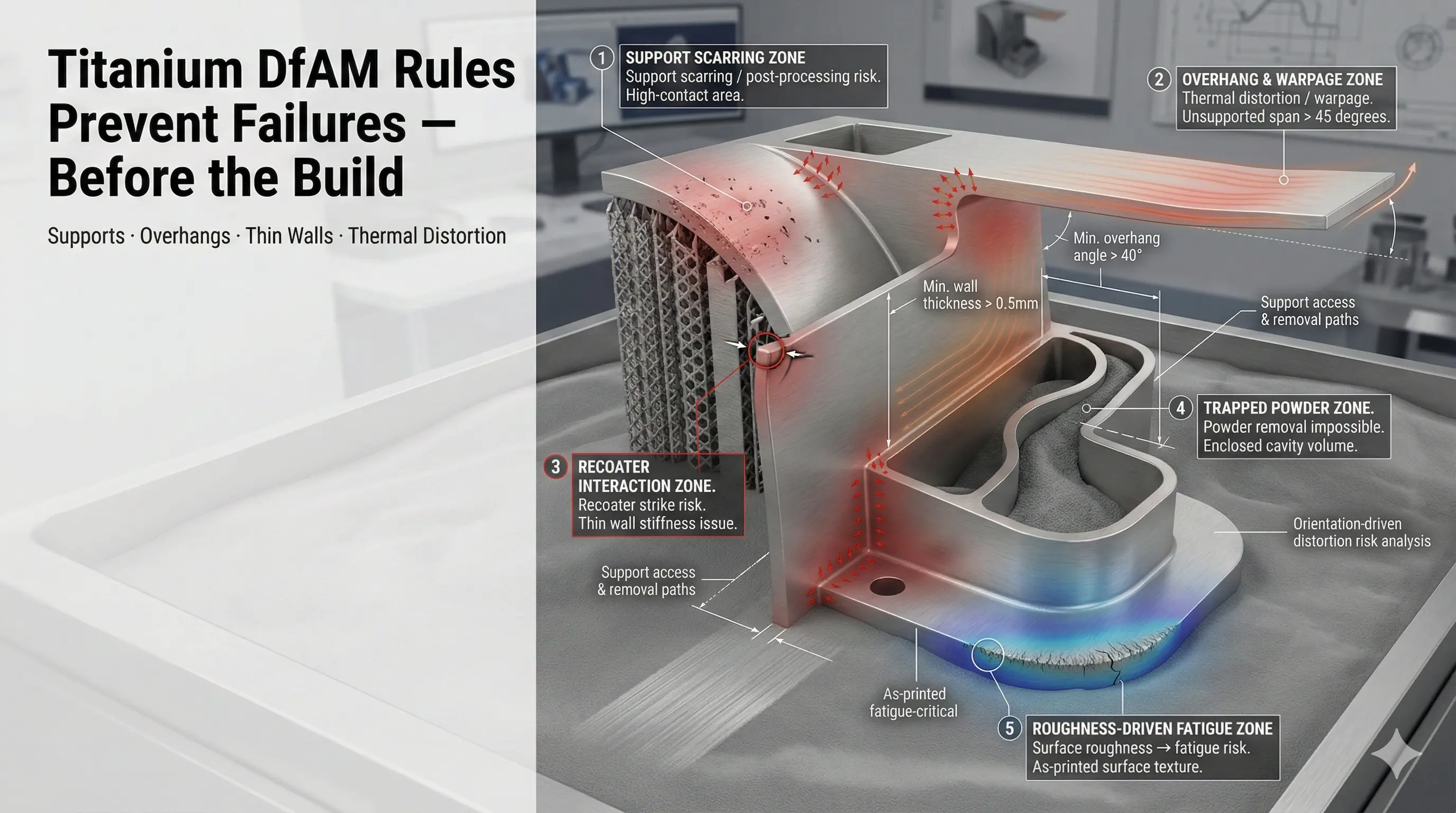
DfAM feasibility
Supports, overhangs, thin walls, trapped powder, orientation, distortion, and machinable datums.
Process-chain route
Print route, stress relief, HIP, support removal, machining, finishing, cleaning, and inspection sequence.
Engineering review
Capability review modules
The quote path is clearer when process fit, post-processing, and acceptance evidence are stated early.
Process fit before quotation
The practical route depends on geometry, alloy name, process physics, support access, post-processing, and the function the part must prove.
LPBF titanium
Reviewed for TC4 / Ti-6Al-4V fine features, tight geometric control, lightweight structures, lattices, and compact functional parts.
EBM titanium
Reviewed where elevated powder-bed temperature, thicker sections, or process-specific support behavior may fit the application.
Conventional alternatives
Machining, casting, or forging remain better when geometry is simple or qualification cost overwhelms the benefit.
Inspection requirements
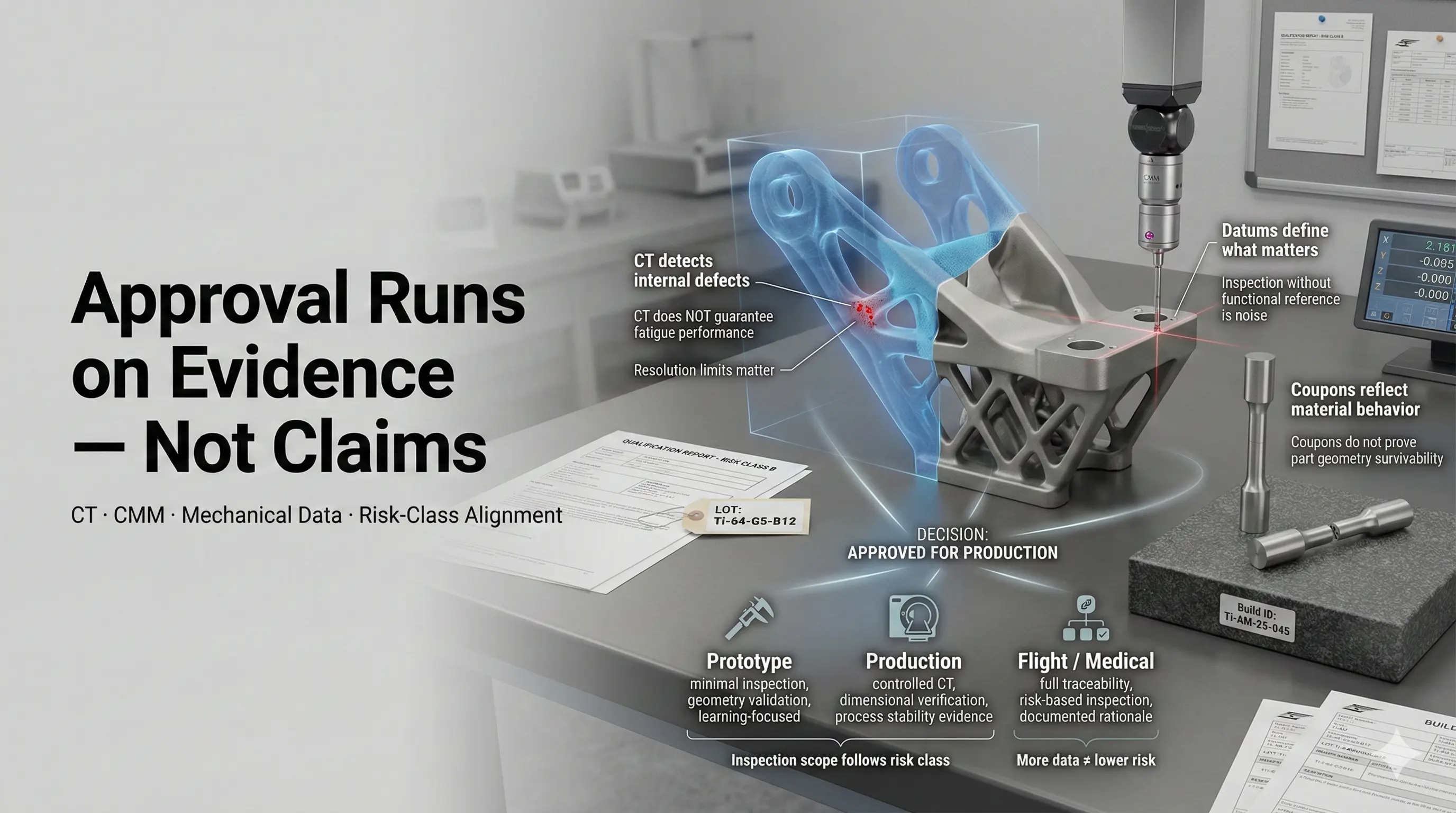
If the part has fatigue, leak, dimensional, surface, density, or traceability requirements, include them with the RFQ so they shape the quote from the start.
Dimensional verification
CMM plans should reference stable datums and finished functional interfaces.
Internal evidence
CT assessment depends on geometry, material thickness, scan setup, and demonstrated detection capability; voxel size alone is not an acceptance criterion.
Mechanical evidence
Coupons, density checks, and post-processing records should match the risk class and build-lot definition.
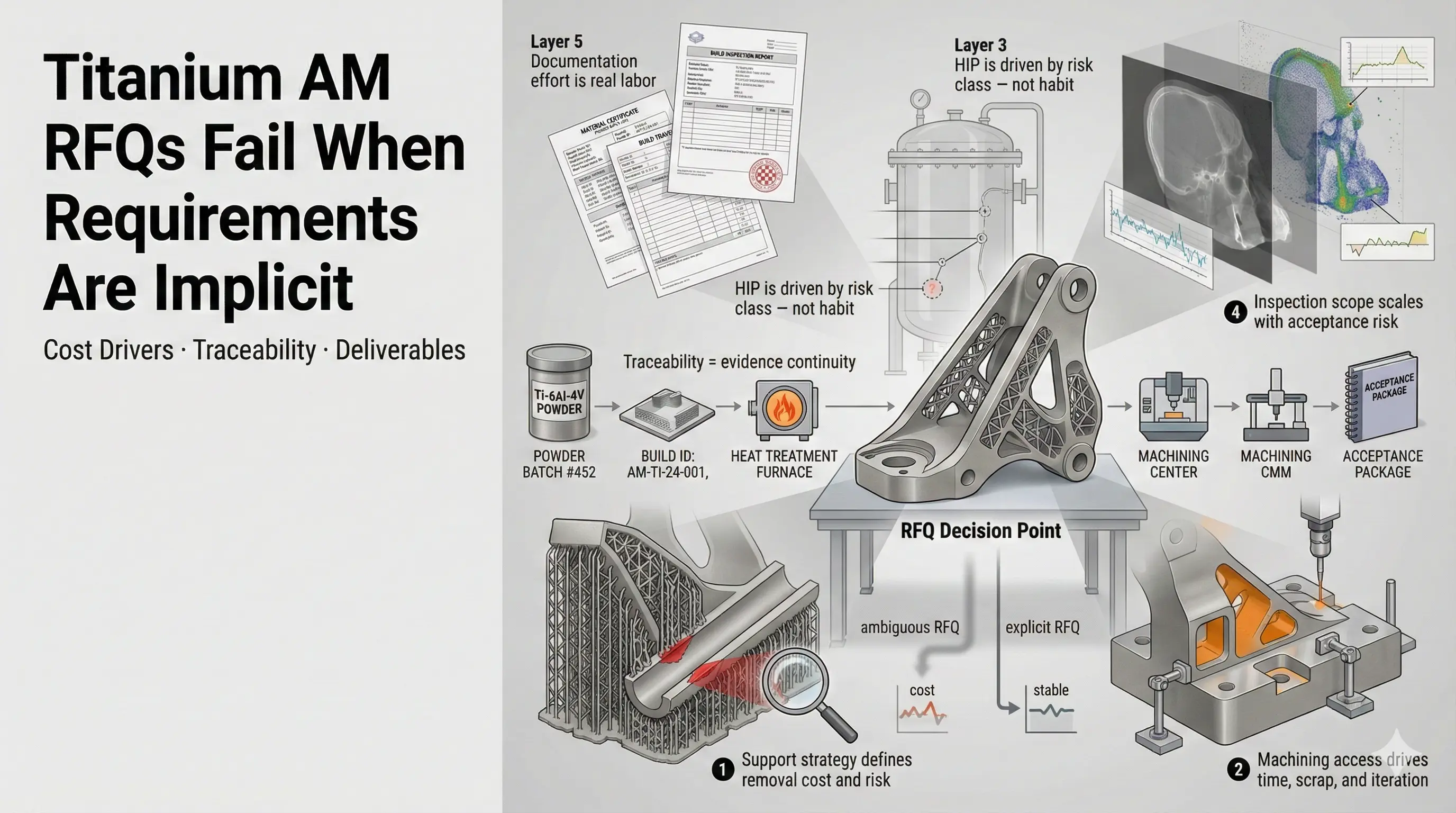
What helps us quote
A useful RFQ connects part geometry to alloy target, quantity, operating environment, finishing route, inspection scope, and deliverables.
Functional surfaces marked
Identify datums, sealing faces, contact planes, bores, threads, ports, and keep-out surfaces.
Service load defined
Provide load spectrum, temperature, corrosion, biocompatibility, fatigue, leak, or flow requirements.
Testing requested
Specify CMM, CT, coupons, density, surface roughness, COA, COC, build record, or traceability requirements.
Contact us
How we support the quote
Review for AM fit, geometry risk, support and powder-removal constraints, finishing access, and process alternatives.
Quotation support based on CAD, drawing, alloy target, quantity, lead time, post-processing, inspection, and documentation requirements.
Send CAD for titanium AM review
Include the alloy target name, such as TC4, Ti-6Al-4V, Grade 5, Ti64, ELI, TA1, TA2, or CP Ti, plus quantity, lead time, critical surfaces, post-processing, inspection, and documentation requirements.