· Updated - TITANIUM 3DP Engineering - Engineering Guides - 17 min read
Titanium 3D Printing for Mining, Mineral Processing, and Hydrometallurgy Hardware
Engineering RFQ guide for TC4, Ti-6Al-4V, Grade 5, CP titanium, and titanium 3D printed mining, mineral processing, and hydrometallurgy hardware, covering acid leach loops, slurry nozzles, corrosion, erosion, CT, CMM, machining, and traceability.
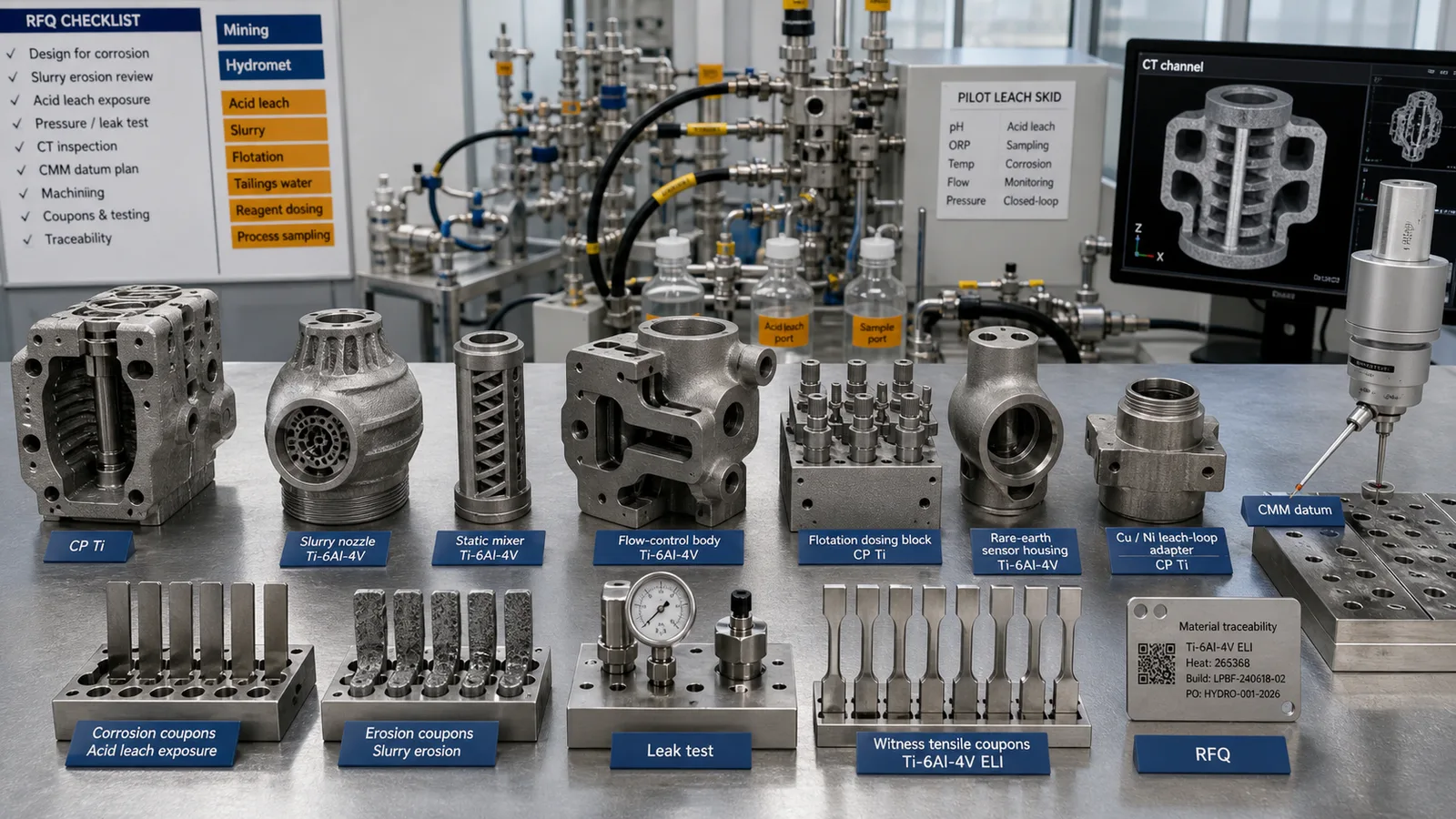
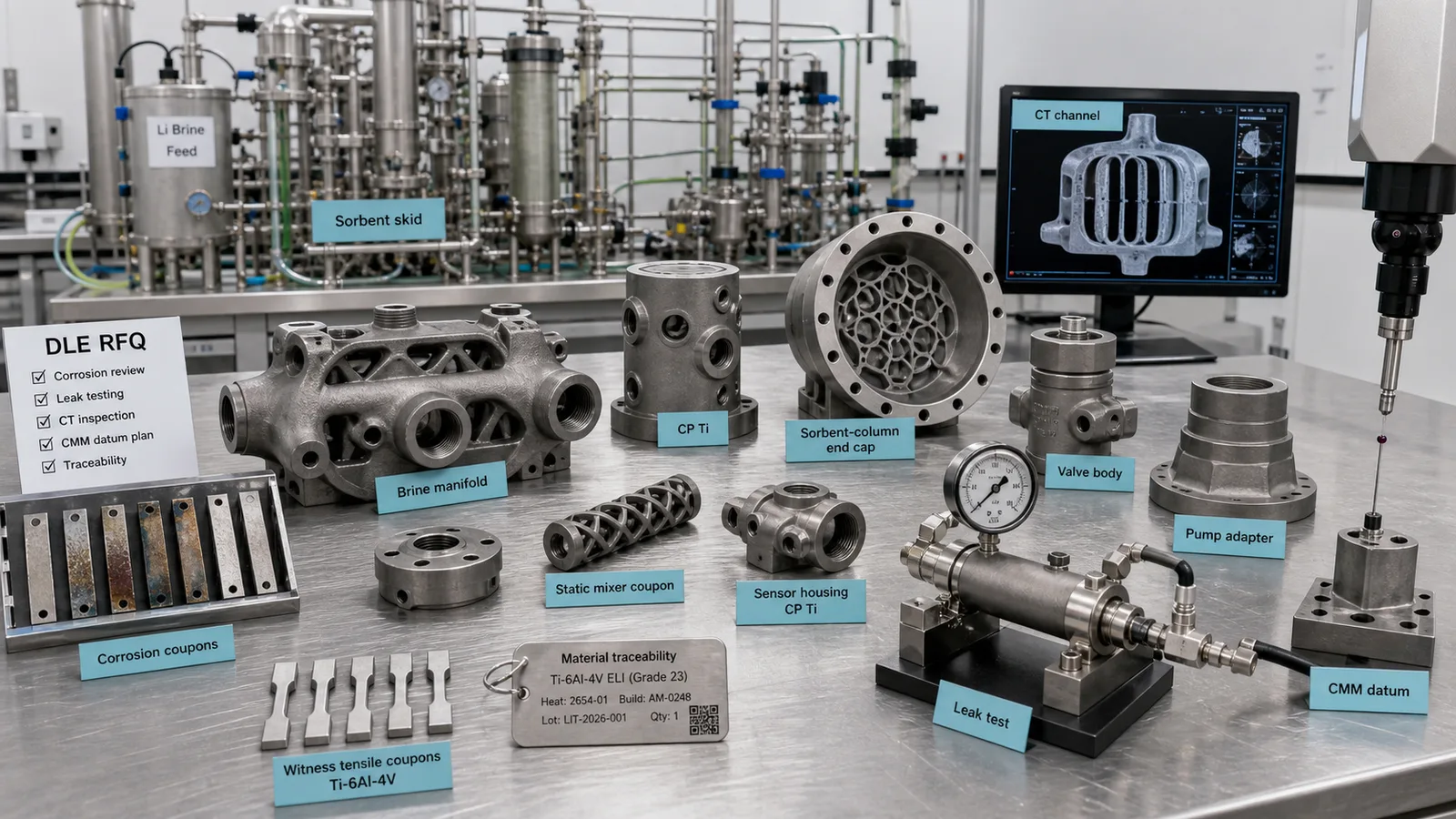
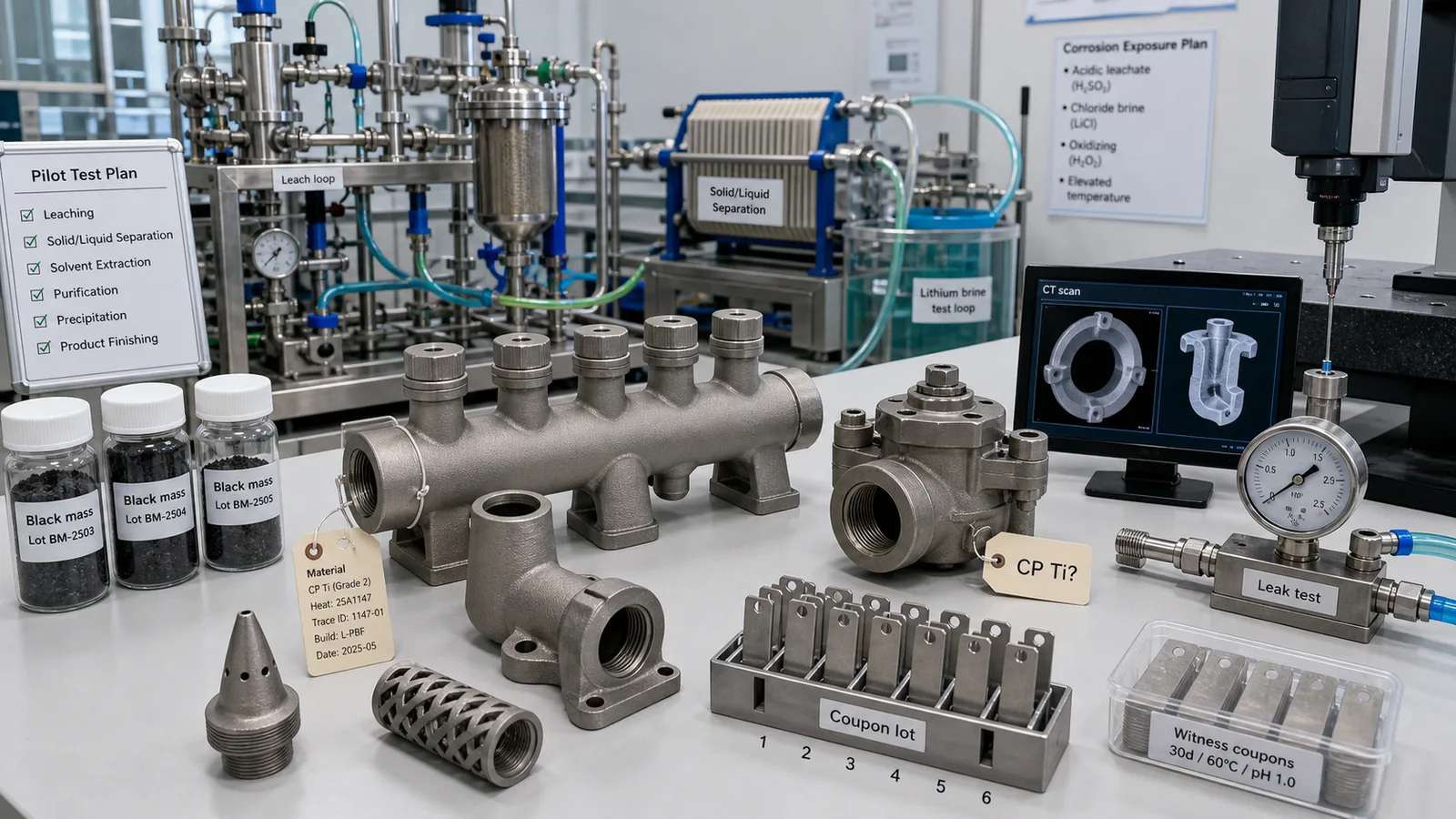
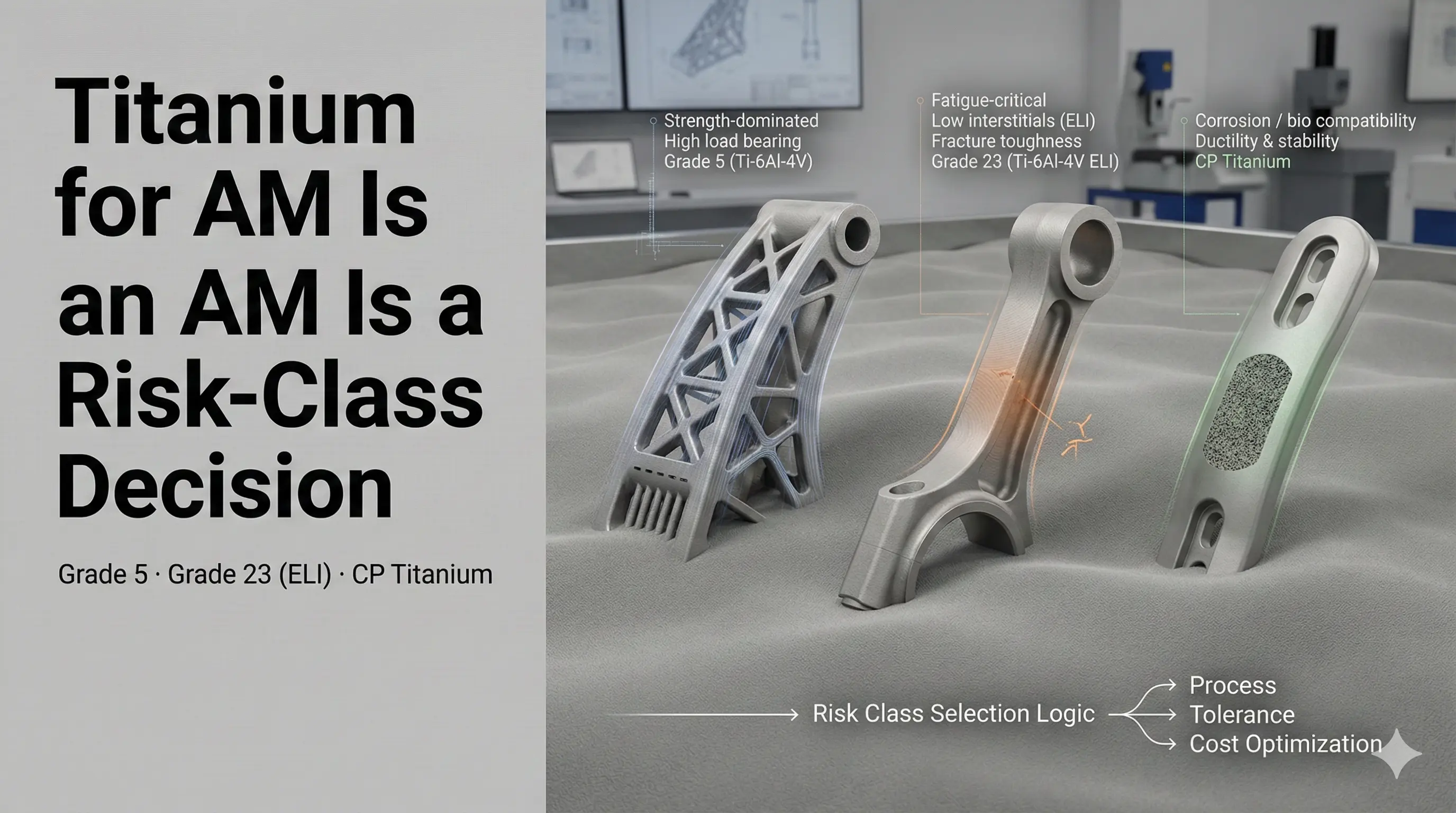
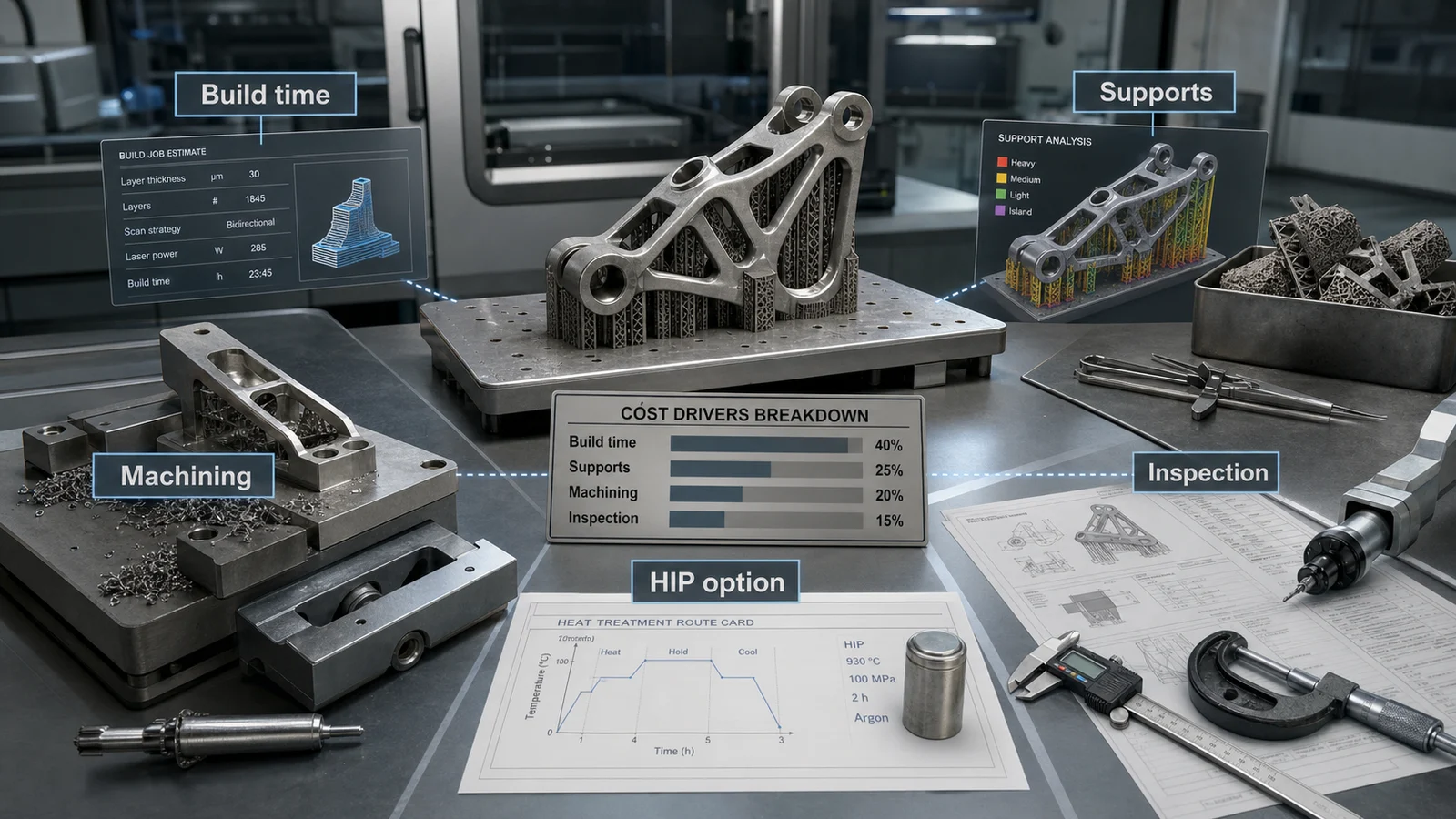
Representative article image; not a customer acceptance record or proof of a qualified manufacturing route. Refer to the cited sources and part-specific inspection records for engineering evidence.
On this page
Titanium 3D printing for mining, mineral processing, and hydrometallurgy hardware is worth reviewing when a compact high-value process component needs corrosion resistance, low-volume iteration, integrated sample paths, fewer leak points, difficult conventional machining, or traceable exposure-test hardware. It is not a default replacement for liners, large tanks, slurry pumps, bulk pipework, mill components, screens, chutes, or commodity wear parts.
The useful question is not “Can a mining part be printed?” The useful question is “Can titanium additive manufacturing deliver a finished, machined, clean, inspected, tested, documented component that solves a specific mineral-processing problem better than machining, casting, fabrication, rubber lining, ceramics, polymer, stainless, nickel alloy, or conventional titanium fabrication?”
Material names are not a substitute for a controlled purchase specification. State the exact alloy or CP titanium grade, standard revision, manufacturing route, condition, and required evidence. TC4 and Ti-6Al-4V terminology must not obscure differences between standards; TA1, TA2, and CP grades also need individual confirmation.
This page is written for process engineers, mining OEMs, pilot-plant teams, hydrometallurgy labs, and procurement teams comparing titanium AM for acid leach sample blocks, slurry nozzle inserts, flotation reagent dosing blocks, rare-earth process sensor housings, copper and nickel leach-loop adapters, corrosion coupon racks, erosion coupon fixtures, static mixer coupons, tailings-water test hardware, compact manifolds, and low-volume replacement parts.
Quick Answer
Titanium AM can be a strong candidate for mining and hydrometallurgy hardware when the part is compact, corrosion-exposed, interface-heavy, low-volume, development-focused, or functionally improved by internal geometry that can be cleaned and verified.
Good candidates include:
- TC4, Ti-6Al-4V, Grade 5, Ti64, CP titanium, TA1, or TA2 acid leach sample blocks, manifold coupons, and sensor bodies for pilot loops when the material route is defined.
- Slurry nozzle inserts, reagent injection bodies, flotation dosing blocks, and static mixer coupons used for process development.
- Rare-earth, lithium, copper, nickel, cobalt, graphite, and critical-minerals test fixtures where material records and exposure evidence matter.
- Corrosion coupon racks and erosion coupon fixtures that compare titanium condition against stainless, duplex, nickel alloy, ceramic, polymer, or lined hardware.
- Compact flow-control bodies, pump adapters, valve adapters, sample ports, and bypass blocks for pilot skids.
- Leach-loop adapters and membrane, filter, cartridge, or separator fixtures where conventional machining creates many fittings or plugs.
- Low-volume replacement parts when legacy tooling is unavailable and the part is small enough for a controlled AM route.
Weak candidates include bulk wear liners, crusher or mill wear parts, large slurry pump casings, high-volume nozzles, long pipe spools, tanks, thickener structures, large pressure vessels, commodity valves, and any abrasive slurry or acidic stream where chemistry, solids, velocity, temperature, cleaning, surface finish, and acceptance evidence are unclear.
Specify the Alloy and Delivery Condition
Use the following names to clarify a supplier conversation, then identify the governing specification. A familiar alloy name alone does not establish corrosion, erosion, or process suitability.
| Material name | Common meaning in sourcing conversations | RFQ caution |
|---|---|---|
| TC4 titanium alloy | Often used in Chinese sourcing for Ti-6Al-4V / Grade 5 / Ti64-type material | Confirm the required standard and heat treatment instead of assuming equivalence |
| Ti-6Al-4V | International alloy name for the common Grade 5 titanium alloy family | Define LPBF, EBM, billet, casting, or other route because properties differ |
| Grade 5 titanium | ASTM grade wording often used by global buyers | State whether AM standards, wrought standards, or customer standards apply |
| Ti64 | Short sourcing shorthand for Ti-6Al-4V | Too informal for a final drawing or purchase order |
| Ti-6Al-4V ELI / Grade 23 | Lower-interstitial route used where ductility, fracture behavior, or medical-adjacent evidence matters | Do not specify ELI only as a generic “better titanium” |
| TA1 / TA2 / CP titanium | Commercially pure titanium family, often searched for corrosion-focused hardware | Confirm the exact grade, chemistry, AM route availability, and corrosion basis |
For a slurry nozzle or sample block, attach the material requirement to the wetted-surface map, particle size and concentration, velocity envelope, temperature, cleaning cycle, and wear acceptance basis. Keep uncertain requirements visible so the supplier can identify unsupported conditions before pricing.
Why This Topic Is Timely and Evergreen
Pilot hardware should help isolate a process or materials question. Define whether the trial measures corrosion, erosion, sample consistency, leakage, or cleanability, and compare the proposed titanium condition with the incumbent material under the same exposure.
The following sources describe industry context, not material qualification:
- The IEA’s Global Critical Minerals Outlook 2026 event page states that critical minerals have moved to the center of energy and economic security discussions and that the 2026 outlook covers market, investment, technology, supply, and demand trends. The report launch is scheduled for July 16, 2026.
- The IEA report Critical Mineral Traceability for Energy and Economic Security, published April 22, 2026, focuses on traceability across copper, lithium, nickel, cobalt, graphite, and rare earth supply chains.
- The USGS Mineral Commodity Summaries 2026 is the annual U.S. government source for nonfuel mineral industry estimates and data sheets across more than 90 minerals and materials.
- DOE’s request for input on the 2026 Critical Materials Assessment reinforces that material importance, supply risk, processing capacity, and resilient energy supply chains remain active policy and procurement topics.
- The World Bank’s Climate-Smart Mining work frames mineral demand growth as both an opportunity and a responsibility, with processing, water, waste, and environmental footprint all part of the long-term mining conversation.
These sources do not mean every mining component should be made in titanium. They explain why engineering teams are asking sharper RFQ questions about corrosion-resistant pilot hardware, critical-mineral traceability, acid leach loops, tailings-water testing, slurry erosion, internal-channel inspection, and documented material condition.
Where Titanium AM Fits Best
Titanium AM is strongest when it solves more than one mineral-processing hardware problem at the same time: corrosion plus compact routing, low-volume iteration plus traceability, sample integration plus fewer fittings, or exposure testing plus a defined evidence package.
| Hardware family | Why titanium AM can help | Main RFQ risk | Evidence to define |
|---|---|---|---|
| Acid leach sample block | Integrated taps, drains, and sensor pockets | Acid chemistry, solids, dead legs | Exposure map, cleaning route, leak test |
| Slurry nozzle insert | Fast iteration and compact geometry | Erosion, blockage, surface condition | Test duty, roughness, flow or wear test |
| Flotation dosing block | Multiple reagent paths in a small body | Cleaning and cross-contamination | Channel map, leak test, CMM |
| Static mixer coupon | Internal mixing geometry for trials | Powder removal and CT visibility | CT or flow test, sectioned coupon |
| Rare-earth sensor housing | Corrosion resistance and low-volume interfaces | Seal faces and chemical exposure | Machined seals, CMM, material records |
| Copper or nickel leach-loop adapter | Custom pilot interfaces and fewer fittings | Acid, temperature, galvanic contact | Alloy review, pressure/leak test |
| Corrosion coupon rack | Matched titanium exposure hardware | Over-specifying simple holders | Alloy, surface condition, lot traceability |
| Erosion coupon fixture | Repeatable slurry exposure geometry | Treating coupon data as production proof | Test plan, surface finish, records |
The best RFQ defines the delivered state, not only the printed shape. A finished hydrometallurgy titanium AM component may require printing, heat treatment, support removal, HIP if justified, machining, cleaning, pressure or leak testing, CT, CMM, roughness checks, coupon records, COA, COC, build records, and controlled packaging.
Start With the Process Stream Map
“Mining service” is not a material requirement. A part used in flotation, acid leaching, solvent extraction, precipitation, tailings-water treatment, rare-earth separation, copper leach, nickel laterite processing, lithium brine testing, or black mass recycling may need completely different material and acceptance controls.
Define the process stream before asking for price:
- Ore or process family: copper, nickel, lithium, cobalt, rare earth, graphite, phosphate, uranium, gold, tailings, waste rock, black mass, or mixed critical-minerals process.
- Chemistry: sulfuric acid, hydrochloric acid, nitric acid, chloride, sulfate, carbonate, ammonium, cyanide, oxidizer, reducing agent, solvent extraction reagent, flotation reagent, lime, caustic, or rinse water.
- Solids: particle size, concentration, hardness, scale, precipitate, filter cake, abrasive fines, clay, organics, graphite, or metal foil.
- Temperature, pressure, flow rate, velocity, pH, oxygen, redox potential, duty cycle, and cleaning chemistry.
- Whether the part is wetted, pressure-retaining, sample-facing, sensor-adjacent, structural, disposable, or only a test fixture.
- Mating materials: stainless, duplex, nickel alloy, rubber lining, ceramic, polymer, graphite, glass, PTFE, FRP, coated steel, or conventional titanium.
If the RFQ says only “titanium mining part,” suppliers must guess the risk. If the RFQ defines the stream and the acceptance basis, suppliers can quote delivered process hardware.
Corrosion Is Only Half the Mining Problem
Titanium can be attractive in acidic, chloride, seawater, brine, and selected hydrometallurgy discussions. But many mining streams are not only corrosive; they are abrasive, scaling, fouling, solids-laden, and difficult to clean.
A titanium part can pass a coupon corrosion screen and still fail in service if:
- A slurry jet erodes a thin wall, nozzle lip, or sharp transition.
- Scale blocks an internal passage.
- Solids collect in dead legs near sample ports.
- Leachate residue remains trapped in rough as-built channels.
- Galvanic contact with stainless, nickel alloy, carbon steel, or graphite creates local risk.
- Reagent carryover contaminates the next process step.
- The surface finish is too rough for repeatable cleaning.
For heavily abrasive slurry service, ceramics, rubber, polyurethane, hardfacing, high-chrome iron, duplex stainless, nickel alloy, or replaceable wear liners may be better than titanium AM. Titanium AM deserves review when corrosion resistance, compact geometry, low-volume iteration, or material evidence offsets the cost and post-processing burden.
CP Titanium vs Ti-6Al-4V in Hydrometallurgy RFQs
Ti-6Al-4V is often the first titanium AM route reviewed because it is broadly available through LPBF and can support compact structural parts, brackets, housings, adapters, and test fixtures. It is not automatically the best wetted material for every acid leach or chloride stream.
CP titanium can be more relevant when corrosion behavior, ductility, or chemical compatibility matters more than high strength. It can also be harder to source through a given AM supplier route, so buyers should review supplier capability before freezing geometry and pricing.
Ti-6Al-4V ELI may be relevant when toughness or a tighter material basis is needed, but it still does not replace stream mapping, heat-treatment definition, surface-condition control, and acceptance testing.
For a broader alloy screen, use Titanium AM Material Selection: Ti-6Al-4V, ELI, and CP Titanium. Do not let three suppliers quote different titanium grades under one hydrometallurgy part number unless the RFQ explicitly asks for an alloy comparison.
Slurry Nozzles and Flow Inserts Need Wear Logic
Slurry nozzles, reagent injection bodies, flow inserts, and static mixer coupons are tempting AM candidates because they can be compact and geometry-driven. They also create erosion and blockage risk.
Before quoting, define:
- Particle size distribution, solids concentration, hardness, and expected scale.
- Flow rate, velocity, pressure drop, impingement angle, and duty cycle.
- Whether the part is a test coupon, pilot fixture, production-intent insert, or sacrificial wear item.
- Surface condition: as-built, machined, polished, abrasive-flow finished, chemically finished, or coated.
- Inspection method after testing: visual, mass loss, dimensional wear, CT, sectioning, roughness, or flow change.
- Whether a replaceable ceramic, polymer, hard metal, or conventional machined insert is lower risk.
Do not ask a titanium AM supplier to quote a “slurry nozzle” without the slurry map. The nozzle geometry is only one part of the decision; erosion evidence and replacement strategy decide whether the route makes sense.
Internal Channels Need Cleaning and CT Planning
Internal channels are one of the main reasons to review titanium AM for mineral processing and hydrometallurgy hardware. They can replace drilled cross-holes, plugs, stacked plates, welded bosses, external tubing, and multiple fittings. They can also trap powder, leachate, reagent residue, slurry fines, precipitate, scale, or cleaning fluid.
High-risk features include:
- Blind channels with no powder exit.
- Long tortuous paths with small diameters.
- Dead legs near sample ports, sensor pockets, or drain points.
- Sudden restrictions near threaded ports.
- Internal lattices connected to wetted flow.
- Static mixer elements that cannot be cleaned or inspected.
- Thin walls between acid, reagent, rinse, and sample paths.
- Channels too small for CT resolution or functional flow testing.
Use Titanium 3D Printed Internal Channels: Powder Removal and CT before freezing a hydrometallurgy manifold, dosing block, sample block, nozzle, or static mixer coupon. The RFQ should state whether CT, borescope, pressure drop, flow testing, cleaning validation, or destructive sectioning is required.
Pressure, Leak, and Flow Evidence
Mining pilot hardware is often treated informally, but acidic, hot, pressurized, solids-laden, or reagent-bearing streams can still create serious acceptance risk. A printed part should not be accepted because it looks dense or because the pilot line is temporary.
Define:
- Working pressure, proof pressure, test fluid, and hold time.
- Leak-test method: pressure decay, hydrostatic test, pneumatic test, bubble test, vacuum test, or buyer-specified method.
- Allowable leakage, port sealing method, and whether testing happens after final machining and cleaning.
- Flow or pressure-drop test when performance depends on channel openness.
- CMM scope for machined datums, ports, bolt patterns, seal faces, and sensor locations.
- CT, roughness, sectioning, coupon, COA, COC, build record, powder lot, and traceability expectations.
Use Titanium AM Qualification and Inspection Evidence to choose evidence by risk class. A simple corrosion coupon holder should not carry the same evidence package as a pressure-tested acid leach manifold.
Machining and Surface Finish Are Part of the Quote
As-built titanium AM texture can be acceptable on noncritical exterior surfaces or selected test coupons. It is usually wrong for seal faces, gasket lands, threaded ports, O-ring grooves, sensor seats, valve seats, datum pads, or repeat-cleaning surfaces.
Plan machining stock for:
- Gasket faces, O-ring grooves, lapped seal faces, and flange interfaces.
- Threaded ports, tube-fitting seats, drain plugs, sample taps, and pressure ports.
- Sensor pockets, CMM datum pads, bolt faces, and mounting pads.
- Nozzle seats, mixer interfaces, cartridge faces, and replaceable insert shoulders.
Post-processing may include stress relief, support removal, HIP if justified, machining, abrasive flow finishing, chemical finishing, passivation, ultrasonic cleaning, drying, capping, packaging, and inspection photos. For the broader sequence, use Post-Processing for Titanium 3D Printing.
Process Choice: LPBF First, DED Selectively
LPBF is usually the first titanium AM process reviewed for compact mining and hydrometallurgy hardware because it supports fine ports, internal channels, dosing bodies, sample blocks, sensor housings, and low-volume precision parts. It also brings powder removal, support strategy, internal roughness, residual stress, and machining access into the quote.
DED may make sense for larger near-net adapters, repair, cladding-adjacent work, or replacement geometry that will be machined after deposition. DED is not usually the first choice for small clean internal channels or compact reagent paths.
EBM may be reviewed when supplier route, geometry, and surface expectations fit, but it is less often the default for small hydrometallurgy flow hardware.
Use Titanium AM Process Selection: LPBF vs EBM vs DED when the route should be selected from geometry, risk, and evidence rather than only supplier availability.
Cost Should Be Compared Against Learning Speed
Titanium AM is not automatically cheaper than machining, casting, fabrication, lining, ceramics, or buying standard process hardware. It becomes credible when the delivered part reduces pilot downtime, consolidates fittings, shortens test-loop redesign, creates repeatable coupon geometry, accelerates corrosion or erosion screening, or provides documented hardware for a critical-minerals program.
Compare total delivered cost:
- Engineering review and DfAM.
- Build orientation, supports, heat treatment, and powder handling.
- HIP if justified by risk class.
- Machining of seal faces, threads, gasket lands, bores, datum pads, sensor pockets, and functional interfaces.
- Cleaning, passivation, drying, capping, packaging, and contamination control.
- CT, CMM, pressure test, leak test, roughness, coupons, COA, COC, build record, powder lot, and traceability.
- Pilot-line downtime, number of design iterations, conventional tooling lead time, and learning value.
Use Titanium 3D Printing Cost Drivers: How to Reduce RFQ Price before comparing suppliers on print price alone.
Example RFQ: Acid Leach Sample Block
A practical RFQ might describe a CP titanium or Ti-6Al-4V LPBF sample block for a copper or nickel acid leach pilot loop. The current assembly uses a machined block, fittings, a sample tee, a drain, and a sensor adapter. The engineering team wants fewer leak paths, integrated pressure taps, better drainability, and a documented material condition for exposure review.
The RFQ should include:
- CAD model and 2D drawing with revision.
- Process stream: copper, nickel, rare earth, lithium, black mass, or other leach chemistry.
- Acid type, concentration, pH, chloride, oxidizer, redox potential, temperature, pressure, solids, scale, and cleaning chemistry.
- Working pressure, proof pressure, leak threshold, test method, and test fluid.
- Sample port, drain, sensor pocket, gasket, O-ring, fitting, and thread details.
- Surfaces that must be machined: seal faces, threads, gasket lands, datum pads, ports, and sensor seats.
- Internal channel size, cleaning access, flow direction, dead-leg limit, and drainability.
- Material target: CP titanium, Ti-6Al-4V, Ti-6Al-4V ELI, or supplier recommendation.
- Inspection scope: CMM, CT or flow test, pressure/leak test, roughness, coupon records, COA, COC, build record, and powder lot.
Better RFQ wording:
Please review this titanium AM acid leach sample block as delivered accepted pilot hardware. The part carries a chloride-bearing acidic leach stream with suspended fines during short-duration test campaigns and includes two sample ports, one drain, one sensor pocket, two threaded process connections, and a machined gasket face. Please recommend CP titanium or Ti-6Al-4V based on the exposure notes; identify powder-removal access, support strategy, machining stock, cleaning route, pressure/leak test method, CMM scope, CT or flow-test recommendation, material traceability, and any DfAM changes needed before quotation. Quote the finished, tested, documented part, not only the printed shape.
Example RFQ: Slurry Nozzle and Erosion Coupon Fixture
A second RFQ might combine a slurry nozzle insert and an erosion coupon fixture. The nozzle is a functional wear and flow part. The coupon fixture is an evidence generator. They should not be accepted with the same logic.
For the nozzle insert, define:
- Slurry solids, particle size, hardness, concentration, flow rate, pressure, velocity, and expected duty cycle.
- Nozzle orifice geometry, seal face, mounting thread, and replacement strategy.
- Surface condition and whether internal finishing is required.
- Wear or flow test method and acceptance criteria.
For the erosion coupon fixture, define:
- Coupon material, surface finish, lot traceability, exposure angle, flow path, and mounting method.
- Whether the fixture is reusable, disposable, or tied to a formal comparison test.
- Cleaning route and how residue will be removed between tests.
- Documentation needed for comparing titanium, stainless, nickel alloy, polymer, ceramic, or lined hardware.
The supplier can quote more accurately when the RFQ separates production-intent geometry from test-fixture evidence.
Choose the Next Engineering Check
Use these related pages to build a complete sourcing decision:
- Battery recycling and critical minerals processing: Titanium 3D Printing for Battery Recycling and Critical Minerals Processing Parts
- Lithium brines and DLE pilot skids: Titanium 3D Printing for Direct Lithium Extraction
- Chemical processing and water treatment: Titanium 3D Printing for Chemical Processing and Water Treatment Parts
- Cross-industry valve, pump, and flow-control hardware: Titanium 3D Printing for Industrial Valves, Pump Parts, and Flow Control Hardware
- Geothermal and downhole brines: Titanium 3D Printing for Geothermal and Downhole Energy Parts
- Seawater, brine concentration, and water reuse: Titanium 3D Printing for Seawater Desalination and Brine Concentration Hardware
- Oilfield produced water and process hardware: Titanium 3D Printing for Oil & Gas, LNG, and Petrochemical Hardware
- Internal channels, powder removal, and CT: Titanium 3D Printed Internal Channels
- Tolerances, datums, and CMM: Titanium 3D Printing Tolerances
- RFQ deliverables and traceability: Titanium AM RFQ and Procurement Guide
When Not to Use Titanium AM
Do not use titanium AM for mining, mineral processing, or hydrometallurgy hardware when:
- A rubber liner, ceramic insert, high-chrome wear part, polymer, FRP, stainless, duplex, nickel alloy, lined steel, or conventional titanium fabrication already meets the requirement.
- The part is a large simple liner, chute, tank, pipe spool, screen, mill component, or commodity pump part.
- Abrasive wear controls performance but no erosion test or replacement strategy exists.
- Acid, chloride, oxidizer, pH, temperature, solids, scale, flow velocity, and cleaning requirements are undefined.
- Internal passages cannot be depowdered, cleaned, inspected, or flow checked.
- Seal faces, gasket lands, threads, ports, sensor pockets, or datum surfaces lack machining stock.
- The part is pressure-retaining or safety-critical and the acceptance route is not defined.
- The buyer needs low-cost high-volume wear parts rather than low-volume engineered process hardware.
Use When Not to Use Titanium Additive Manufacturing before quoting a simple mining part. Titanium AM should earn its place by improving corrosion resistance, pilot-loop packaging, low-volume iteration, evidence, traceability, or system integration.
Bottom Line
Titanium 3D printing can be valuable for mining, mineral processing, and hydrometallurgy hardware when it turns a difficult low-volume process component into a compact, corrosion-aware, cleanable, machined, inspected, tested, documented part. The strongest candidates are acid leach sample blocks, slurry nozzle inserts, flotation dosing bodies, static mixer coupons, rare-earth sensor housings, copper and nickel leach-loop adapters, corrosion coupon racks, erosion coupon fixtures, compact manifolds, and pilot-plant hardware where exposure, cleaning, machining, CT, CMM, and traceability are planned before quote comparison.
The weak cases are large wear parts, commodity mining components, simple fabricated equipment, and any abrasive or corrosive stream where the RFQ ignores solids, chemistry, surface finish, powder removal, pressure testing, leak testing, cleaning, and evidence.
If you are reviewing a titanium acid leach block, slurry nozzle, flotation dosing part, rare-earth sensor housing, copper or nickel leach-loop adapter, corrosion coupon rack, erosion fixture, static mixer coupon, tailings-water test block, or compact hydrometallurgy manifold, send the CAD model, drawing, process stream map, target alloy, pressure and temperature, quantity, post-processing expectations, and inspection scope through the TITANIUM 3DP RFQ page. Include the surfaces that need machining, passages that need CT or flow testing, and corrosion or erosion evidence needed for acceptance.
- Mining
- Mineral processing
- Hydrometallurgy
- Acid leach
- Slurry
- Rare earth
- Copper
- Nickel
- Critical minerals
- Tc4
- Ti6al4v
- Grade 5 titanium
- CP titanium
- RFQ