· Updated - TITANIUM 3DP Engineering - Engineering Guides - 13 min read
Titanium 3D Printing for Humanoid Robots and AI Robotics Hardware
Engineering RFQ guide for titanium 3D printed humanoid robot and AI robotics hardware, covering lightweight joints, wrist and ankle brackets, actuator housings, sensor mounts, fatigue, CMM, CT, and traceability.
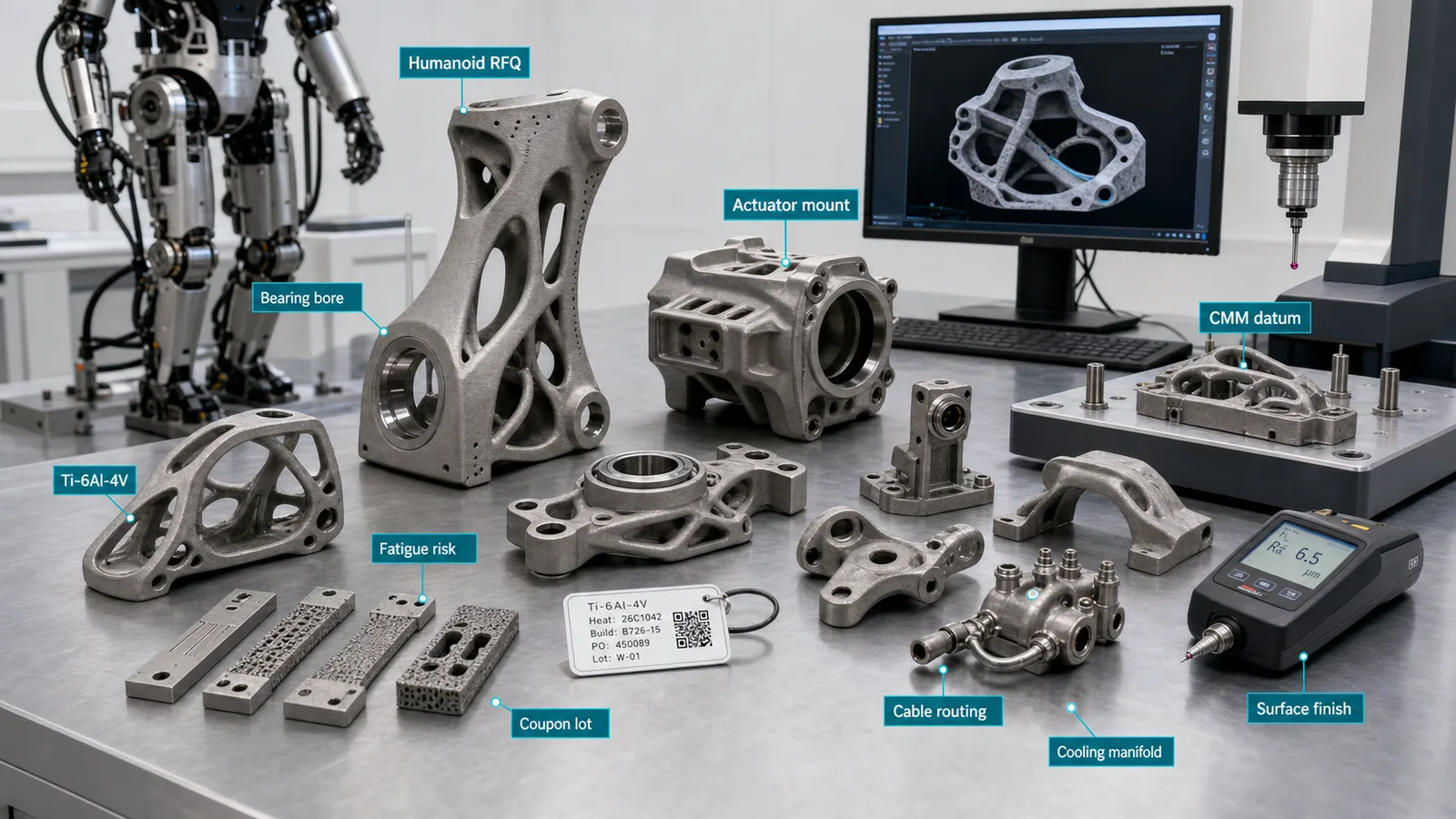
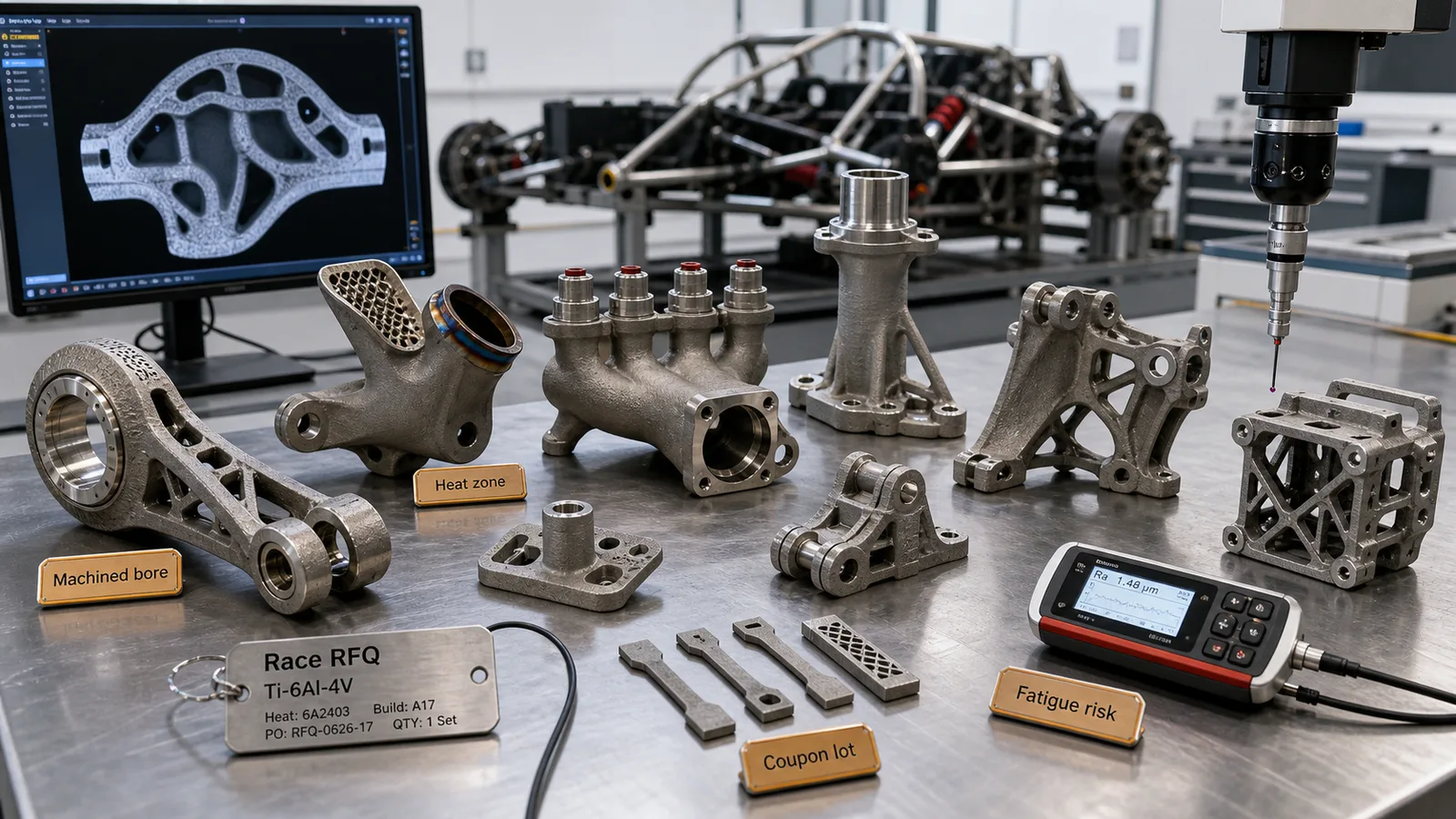
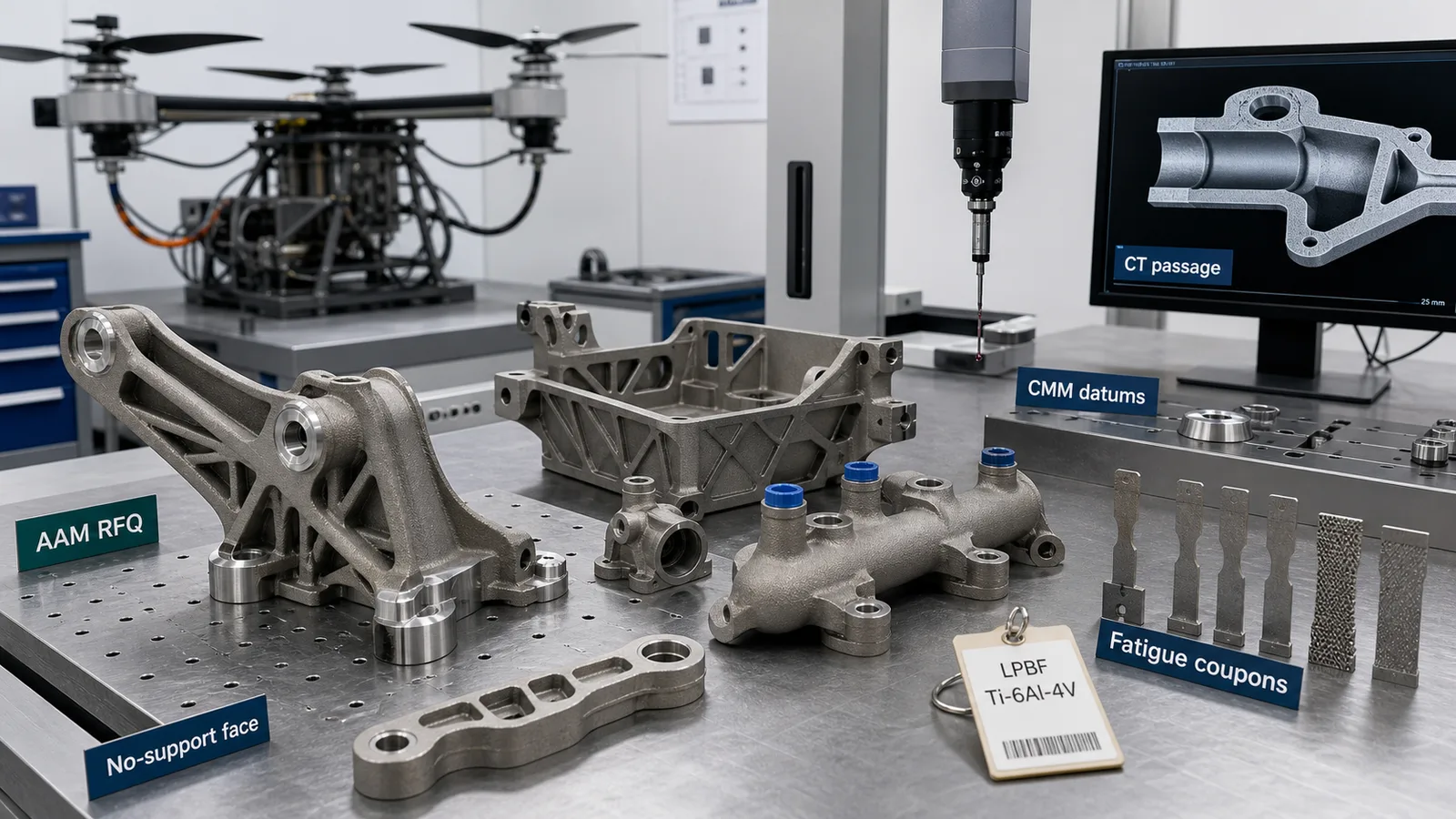
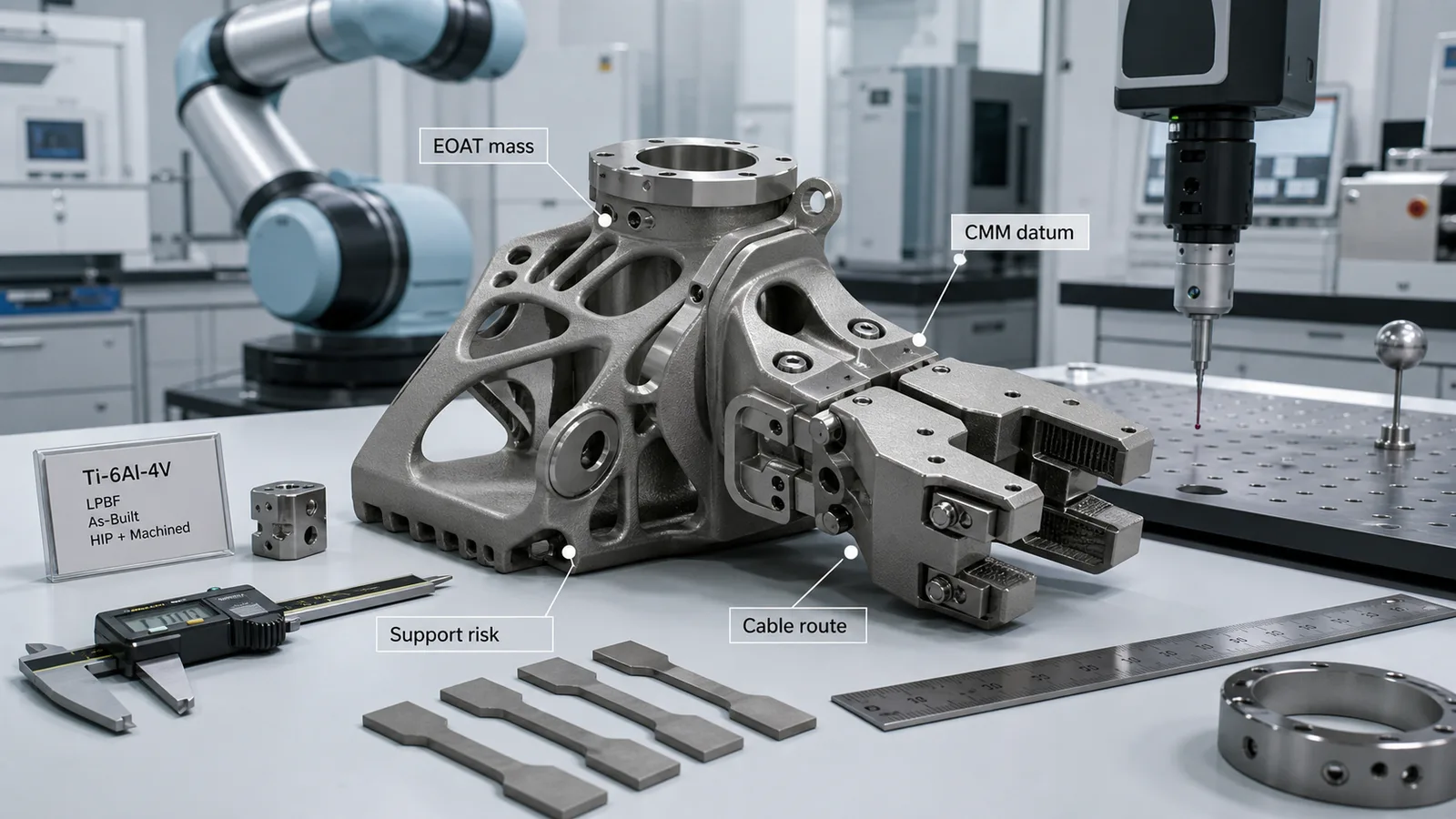
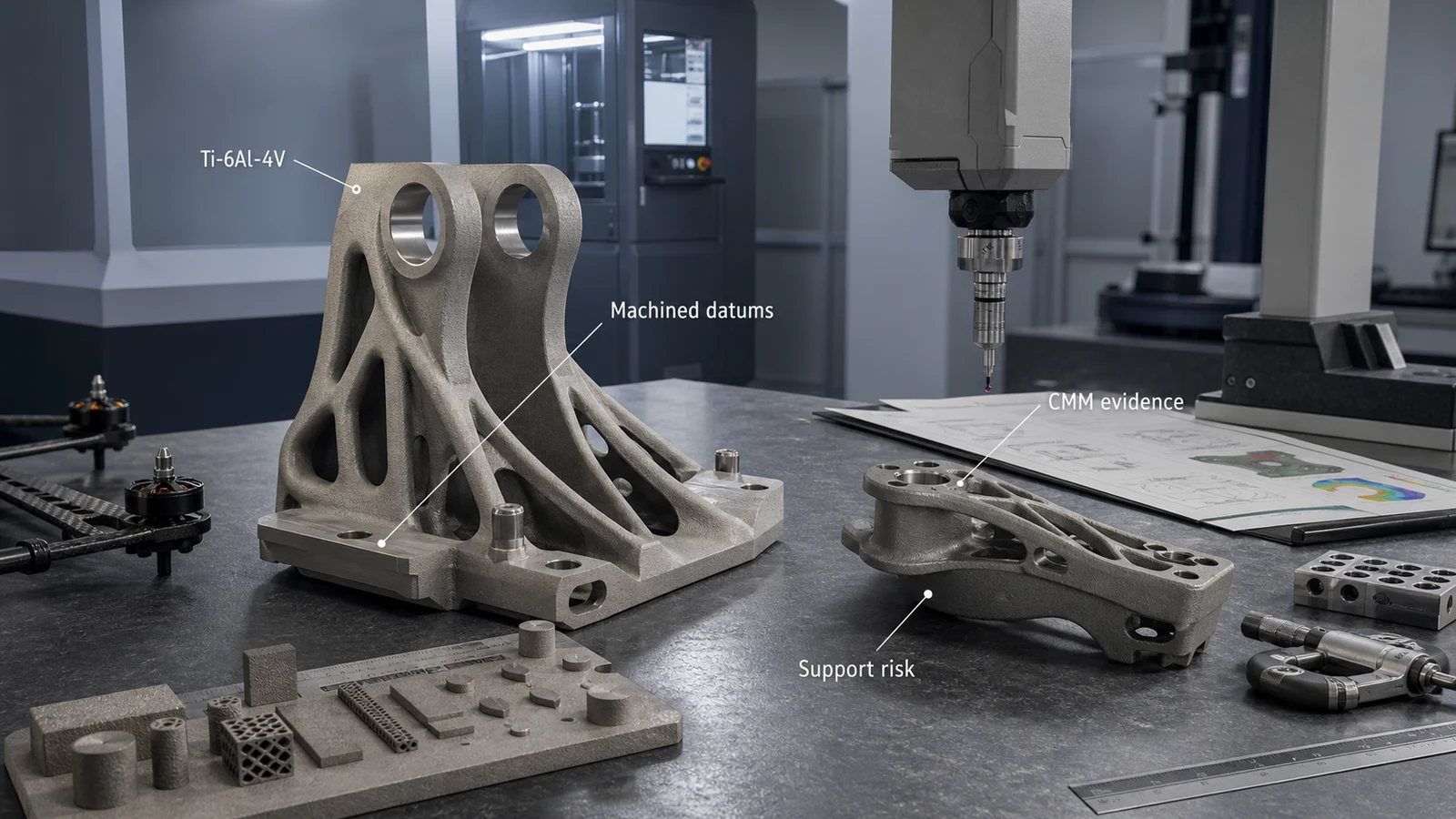
Representative article image; not a customer acceptance record or proof of a qualified manufacturing route. Refer to the cited sources and part-specific inspection records for engineering evidence.
On this page
Titanium 3D printing for humanoid robots and AI robotics hardware is useful when a moving robot part needs lower limb mass, compact packaging, higher stiffness-to-weight ratio, corrosion resistance, fast iteration, or documented traceability. It is not useful merely because the robot is humanoid or because the project is linked to artificial intelligence.
Humanoid robots turn structural hardware into a system-level tradeoff. A wrist adapter, ankle bracket, shoulder link, actuator housing, sensor mount, or cable-routing body can influence torque margin, balance recovery, battery runtime, vibration, maintenance access, and fall-damage risk. The best titanium additive manufacturing projects define those constraints before the RFQ, not after a supplier has already quoted a visually complex part.
This guide focuses on manufacturable titanium AM hardware for humanoid robots, physical AI platforms, robot test rigs, and high-end embodied automation. For conventional robot cells, end-of-arm tooling, grippers, and automation fixtures, use the broader Titanium 3D Printing for Robotics and Automation Parts guide first.
Quick Answer
Titanium additive manufacturing is worth reviewing for humanoid robot hardware when the part is compact, interface-heavy, load-bearing, motion-sensitive, and difficult to machine efficiently at prototype or low-volume production quantities.
Strong candidates include:
- Ankle, knee, wrist, elbow, shoulder, and hip brackets where lower distal mass improves torque margin or balance behavior.
- Compact actuator housings that need bearing bores, cable exits, cooling passages, and mounting bosses in a tight package.
- Wrist adapters, palm frames, and tool interfaces where stiffness protects repeatability.
- Sensor, camera, lidar, force-torque, or tactile module mounts that need stiffness with low inertia.
- Cable-routing and pneumatic bodies where internal passages can remove fittings, clips, tubes, and leak paths.
- Robot limb test-rig parts, calibration fixtures, and durability-test coupons that need fast iteration with traceable material.
- Corrosion-resistant or washdown-adjacent hardware used in logistics, food-adjacent automation, marine robotics, or field trials.
Weak candidates include cosmetic covers, large shell panels, simple plates, commodity aluminum brackets, high-volume stamped parts, decorative lattices, and any safety-critical production part where the buyer cannot define fatigue, inspection, post-processing, and change-control evidence.
If the part is still speculative, run the When Not to Use Titanium Additive Manufacturing screen before requesting production pricing.
Why Humanoid Robot Hardware Is Timely in 2026
Humanoid robots are moving from demonstration programs into more serious industrial evaluation. The International Federation of Robotics 2026 trends report lists AI, autonomy, IT/OT convergence, humanoids, safety, and standards as major robotics themes. IFR notes that humanoids must prove reliability, energy efficiency, maintenance performance, and factory-floor safety before they can compete with established automation.
Commercial signals have also become stronger. On June 24, 2026, Agility Robotics announced a planned public-market transaction for its humanoid robotics business. That does not make titanium AM the right process for every humanoid component, but it does show why more engineering teams are reviewing physical AI hardware, robot bodies, and production evidence with greater seriousness.
The standards conversation is also current. ISO 10218-1:2025 addresses robot safety requirements, and ISO 10218-2:2025 addresses industrial robot applications and robot cells. A titanium RFQ does not replace a safety assessment, but a part that belongs to a moving robot should be quoted with loads, interfaces, inspection, and documentation in mind.
How Humanoid Hardware Differs From Industrial EOAT
Industrial robot tooling often has a fixed task, known payload, and defined cell envelope. Humanoid robots add more uncertainty. They may walk, recover balance, squat, lift bins, open doors, manipulate irregular objects, or work in human-designed environments. This makes hardware screening more demanding.
Key differences include:
- Mass far from the torso affects joint torque, balance, and battery runtime.
- Limbs see repeated acceleration, deceleration, impact, and fall-recovery loads.
- Packaging is constrained by actuators, gearboxes, brakes, sensors, cables, covers, and maintenance access.
- Field testing can change the design faster than conventional machining lead times.
- Part families may move from prototype to pilot volume before design maturity is fully stable.
Titanium AM fits when the delivered part improves the robot system. It does not fit when the CAD model is simply more organic than a machined aluminum bracket.
Candidate Parts for Titanium 3D Printing
| Humanoid robot part family | Why titanium AM can help | Main risk to control | RFQ evidence to define |
|---|---|---|---|
| Ankle and wrist brackets | Lower distal mass, compact load paths, integrated cable clearance | Fatigue near bearing bosses and fasteners | Load case, datum plan, CMM, surface finish, HIP decision |
| Actuator housings | Dense packaging around motor, gearbox, brake, sensor, and cooling features | Bearing bore accuracy and thermal distortion | Machining stock, bore tolerance, stress relief, inspection report |
| Shoulder, elbow, hip, and knee links | High stiffness-to-weight ratio in limited envelope | Over-thinned ribs and unsupported transitions | FEA assumptions, minimum wall, support strategy, proof check |
| Sensor and camera mounts | Stiff sensing position with low inertia | Vibration and calibration drift | Datum surfaces, CMM, surface finish, mounting torque notes |
| Cable-routing and pneumatic bodies | Fewer external fittings, cleaner assembly, reduced snag points | Powder removal and inaccessible passages | CT, cleaning route, pressure or leak test if relevant |
| Palm frames and tool adapters | Compact interface for end effectors, tactile sensors, or test tools | Local wear and threaded-interface damage | Thread inserts, machined pads, replaceable contact details |
| Limb durability test fixtures | Faster design iteration with traceable material lots | Mistaking test hardware for production evidence | Revision control, coupon lot, COC, inspection scope |
Use this table as a screening tool. The best candidate is usually a small, expensive, interface-rich component where weight, stiffness, routing, and fast iteration create a measurable system benefit.
Lightweighting Must Protect Stiffness and Torque Margin
Humanoid robot buyers often ask for lightweight hardware, but the target should not be “the lightest possible titanium part.” The target should be lower mass at the same or better functional performance. Removing mass from a robot limb is valuable only when stiffness, fatigue life, bearing alignment, and service access remain controlled.
Good lightweighting goals include:
- Reducing distal mass at the foot, ankle, wrist, hand, or tool interface.
- Moving material into the actual load path instead of keeping billet-shaped dead mass.
- Reducing stack height by consolidating plates, spacers, and adapters.
- Improving cable clearance without adding external guards and clips.
- Keeping machined datum pads where calibration and bearing alignment require them.
- Preserving wall thickness and surface condition in fatigue-sensitive zones.
For deeper system-level screening, pair this guide with Titanium Additive Manufacturing Applications That Achieved Real Weight Reduction.
Joint Brackets: Ankles, Wrists, Shoulders, and Hips
Joint brackets are often the first humanoid robot parts worth reviewing because they sit near actuators, bearings, torque paths, and moving masses. A printed titanium joint bracket can combine ribs, cable windows, fastener bosses, machined datum pads, and weight relief in one component.
The design should avoid common AM traps:
- Bearing bores printed to final size without machining stock.
- Thin ribs tied directly into thick bosses with sharp transitions.
- Support scars left on tensile or bending surfaces.
- Lattice features placed near bolt preload zones.
- Hidden holes that cannot be cleaned or inspected.
- Datum surfaces placed on as-built rough geometry.
The RFQ should state which bores, pads, faces, slots, and threads are machined after printing. It should also define whether the part needs stress relief, HIP, blasting, polishing, anodic treatment, passivation, proof loading, or serial-number traceability.
Actuator Housings Need More Than a Print Quote
Humanoid robot actuator housings can look like strong AM candidates because packaging is dense. A housing may need to support bearings, route cables, locate sensors, protect seals, reduce weight, and provide cooling or service access. Titanium AM may help when machining a conventional housing would require multiple parts, deep pockets, cross-drilling, or awkward assembly.
However, an actuator housing can become expensive quickly. Bearing seats and gearbox interfaces usually need finish machining. Thermal distortion can shift bores. Threads may need inserts. Sealing faces may need flatness, surface finish, and leak-test criteria. If the part includes internal channels, the RFQ must define powder removal and inspection assumptions.
Use Titanium 3D Printed Internal Channels when an actuator housing includes enclosed cooling passages, oil routes, pneumatic paths, or cable channels that cannot be visually inspected.
For actuator valve blocks, pneumatic manifolds, hydraulic manifolds, and pressure-tested fluid-power hardware around robot joints, use Titanium 3D Printing for Hydraulic Manifolds and Fluid Power Components.
Fatigue, Impact, and Fall-Recovery Loads
A humanoid robot limb part may pass a static strength calculation and still be a poor titanium AM candidate. Walking, gripping, lifting, crouching, stumbling, emergency stops, and test-lab falls can all create repeated or unexpected loads. Fatigue-sensitive geometry deserves special attention.
High-risk locations include:
- Support-removal regions on loaded surfaces.
- Thin-to-thick transitions near bosses.
- Sharp rib intersections.
- Internal channel corners near stress paths.
- Bearing bores with insufficient edge distance.
- As-built surfaces in tensile zones.
- Holes or cutouts placed near high bending stress.
The RFQ should describe expected duty cycle, proof loads, fall or shock assumptions, surface finish targets, and whether HIP is required. For fatigue-sensitive brackets, use Titanium 3D Printing Fatigue Design before freezing the geometry.
Bearing Bores, Datums, and CMM Planning
Humanoid robot hardware often depends on precise alignment. Printed titanium is not a substitute for a datum strategy. A joint bracket can be beautifully lightweight and still fail if bearing bores, motor interfaces, encoder mounts, or robot calibration surfaces are not measurable.
Define these features before quoting:
- Primary robot-side datums.
- Bearing bore diameter, cylindricity, and position.
- Gearbox, motor, brake, and encoder mounting faces.
- Torque sensor and force sensor contact surfaces.
- Cable exit and connector-clearance zones.
- Thread type, insert expectation, and minimum engagement.
- Surface finish for seals, bearings, and sliding contacts.
- CMM report scope and sampling plan.
For wording and drawing expectations, use Titanium 3D Printing Tolerances: Datum Planning and CMM.
Material Selection for Humanoid Robot Hardware
Ti-6Al-4V is often the first alloy considered for load-bearing humanoid robot hardware because it has strong AM supplier familiarity, high strength-to-weight ratio, and broad use in engineering components. Ti-6Al-4V ELI may be considered when ductility, fracture behavior, or a tighter acceptance basis matters. CP titanium may fit corrosion-focused brackets or housings where high strength is not the main driver.
The alloy decision should be tied to the part’s actual job:
- Use Ti-6Al-4V for many structural brackets, actuator housings, and compact links.
- Review Ti-6Al-4V ELI where ductility, toughness, or a more conservative acceptance route is important.
- Review CP titanium for corrosion-focused, lower-strength brackets and fluid-adjacent hardware.
- Avoid selecting titanium when aluminum, steel, polymer, or carbon fiber gives the same system value at lower delivered cost.
For a broader alloy screen, see Titanium AM Material Selection: Ti-6Al-4V, Ti-6Al-4V ELI, and CP Titanium.
Process Choice: LPBF First, but Not Always
LPBF is usually the first titanium AM process reviewed for humanoid robot brackets, housings, links, and compact manifolds because it can produce fine features, tight packaging, and good near-net geometry. EBM may be reviewed for some larger titanium structures where surface condition and feature resolution are acceptable. DED is usually more relevant to repair, large preforms, or rough near-net structures than compact precision robot hardware.
The process choice should be driven by:
- Minimum wall and rib requirements.
- Feature size around bosses, bores, and cable windows.
- Surface finish and fatigue sensitivity.
- Build orientation and support-removal access.
- Heat treatment, HIP, and machining stock.
- Supplier experience with titanium robot or aerospace-adjacent hardware.
- Inspection expectations, especially CT and CMM.
Use Titanium AM Process Selection: LPBF, EBM, and DED when comparing manufacturing routes, and use Titanium DfAM Rules for LPBF and EBM before finalizing wall thickness, supports, overhangs, and powder access.
Inspection and Traceability for Physical AI Hardware
Humanoid robot projects often move quickly, but documentation still matters. A prototype bracket may become a pilot-production part faster than expected. If the early RFQ does not track material, revision, heat treatment, machining, and inspection, later design transfer becomes painful.
Useful deliverables include:
- Material certificate or certificate of conformance.
- Build lot and serial-number traceability.
- Heat treatment and HIP records where required.
- CMM report for machined datums and bores.
- CT report for internal channels or critical hidden geometry.
- Surface finish report for bearing, seal, or fatigue-relevant areas.
- Witness coupon plan for tensile or density evidence where needed.
- Revision-controlled drawing and manufacturing notes.
For deeper acceptance planning, see Titanium AM Qualification and Inspection.
Cost Should Be Compared at Robot-System Level
Titanium AM is rarely the lowest print-only price. The quote becomes defensible when the delivered robot-system value is visible. A lighter ankle bracket may reduce actuator load. A wrist adapter may allow a smaller actuator. A consolidated housing may remove fasteners, tubes, and assembly risk. A test fixture may shorten design iteration.
Cost drivers include:
- Part size and build volume.
- Support volume and support-removal access.
- Machined datum faces and bearing bores.
- HIP, stress relief, blasting, polishing, and cleaning.
- CT, CMM, tensile coupons, leak testing, or proof testing.
- Revision churn during prototype development.
- Documentation level needed for pilot or production use.
Use Titanium 3D Printing Cost Drivers to separate geometry cost from post-processing, inspection, and procurement requirements.
Example RFQ: Titanium Humanoid Ankle Bracket
A practical RFQ might describe a Ti-6Al-4V LPBF ankle bracket for a humanoid robot prototype. The current machined aluminum bracket is too heavy near the foot, and the team wants to reduce distal mass while preserving bearing alignment and stiffness around the actuator interface.
The RFQ should include:
- CAD model and 2D drawing with revision.
- Alloy target, usually Ti-6Al-4V unless another grade is justified.
- Process preference or supplier-recommended process.
- Build orientation constraints if surface direction matters.
- Bearing bore machining stock and final tolerance.
- Robot-side and actuator-side datums.
- Expected loads, duty cycle, shock assumptions, and test plan.
- Surface finish targets on fatigue-sensitive zones.
- Heat treatment, HIP, blasting, and cleaning expectations.
- CMM report for datums and bores.
- Material certificate, build lot, and serial number.
- Required quantity for prototype, pilot, and next revision.
This is different from asking for a “lightweight titanium robot part.” The supplier can quote more accurately when the engineering problem is defined.
Example RFQ: Actuator Housing With Cable and Cooling Features
A second example is a compact Ti-6Al-4V actuator housing that combines motor mounting, gearbox support, cable routing, and a small cooling passage. Titanium AM may reduce assembly count and protect packaging space, but it also adds inspection and cleaning responsibilities.
The RFQ should define:
- Which faces and bores are machined after printing.
- Minimum wall thickness around cooling channels.
- Powder-removal access and cleaning method.
- CT requirement for internal passages.
- Leak or pressure test if the channel carries fluid.
- Thread inserts or post-machined threads.
- Surface finish for seal faces and bearing seats.
- Allowable distortion after stress relief.
- Whether prototype parts can use a simplified inspection scope.
For procurement wording, see Titanium AM RFQ and Procurement Guide.
Choose the Next Engineering Check
Use these related pages to build a complete sourcing decision:
- Broad robotics and automation parts: Titanium 3D Printing for Robotics and Automation Parts
- Application map: Titanium 3D Printing Applications
- Weight reduction screen: Titanium AM Applications That Achieved Real Weight Reduction
- Fatigue and surface finish: Titanium 3D Printing Fatigue Design
- Datums and CMM: Titanium 3D Printing Tolerances
- Materials: Titanium AM Material Selection
- Processes: Titanium AM Process Selection
- Internal channels: Titanium 3D Printed Internal Channels
- Inspection: Titanium AM Qualification and Inspection
- RFQ deliverables: Titanium AM RFQ and Procurement Guide
When Titanium AM Is the Wrong Route
Do not use titanium AM for humanoid robot hardware when:
- The part is a simple flat bracket that machines cheaply from aluminum or steel.
- The part is a cosmetic shell with no structural, thermal, corrosion, or packaging benefit.
- The geometry includes hidden passages that cannot be cleaned or inspected.
- Fatigue-sensitive surfaces remain rough and unsupported by testing.
- The buyer cannot define datum, bore, surface finish, or inspection requirements.
- The program needs high-volume commodity pricing before the design is stable.
- A safety-critical part lacks the validation path needed for the robot application.
Titanium AM should earn its place in the robot by improving mass, stiffness, routing, durability, lead time, or documentation. If it does not improve one of those outcomes, a conventional process may be the better engineering choice.
Bottom Line
Humanoid robots and physical AI systems create real opportunities for titanium 3D printed hardware, especially in compact joints, actuator housings, wrist and ankle brackets, sensor mounts, and test-rig parts. The strongest RFQs connect geometry to a robot-level result: lower limb mass, protected stiffness, cleaner packaging, reliable inspection, and traceable manufacturing evidence.
If you are reviewing a titanium humanoid robot bracket, actuator housing, wrist adapter, sensor mount, or lightweight limb component, send the CAD model, target material, load assumptions, quantity, and inspection expectations through the TITANIUM 3DP RFQ page. For early manufacturability review, include the surfaces that need machining, the areas that see repeated load, and any internal channels that require cleaning or CT inspection.
- Humanoid robots
- Ai robotics
- Robotics
- Lightweighting
- Actuator housings
- Joint brackets
- Fatigue
- LPBF
- CMM
- RFQ