· Updated - TITANIUM 3DP Engineering - Engineering Guides - 12 min read
Titanium 3D Printing for Motorsport and Racing Parts
Engineering RFQ guide for titanium 3D printed motorsport and racing parts, covering lightweight brackets, suspension links, cooling manifolds, exhaust-adjacent hardware, fatigue, CMM, CT, and rulebook risk.
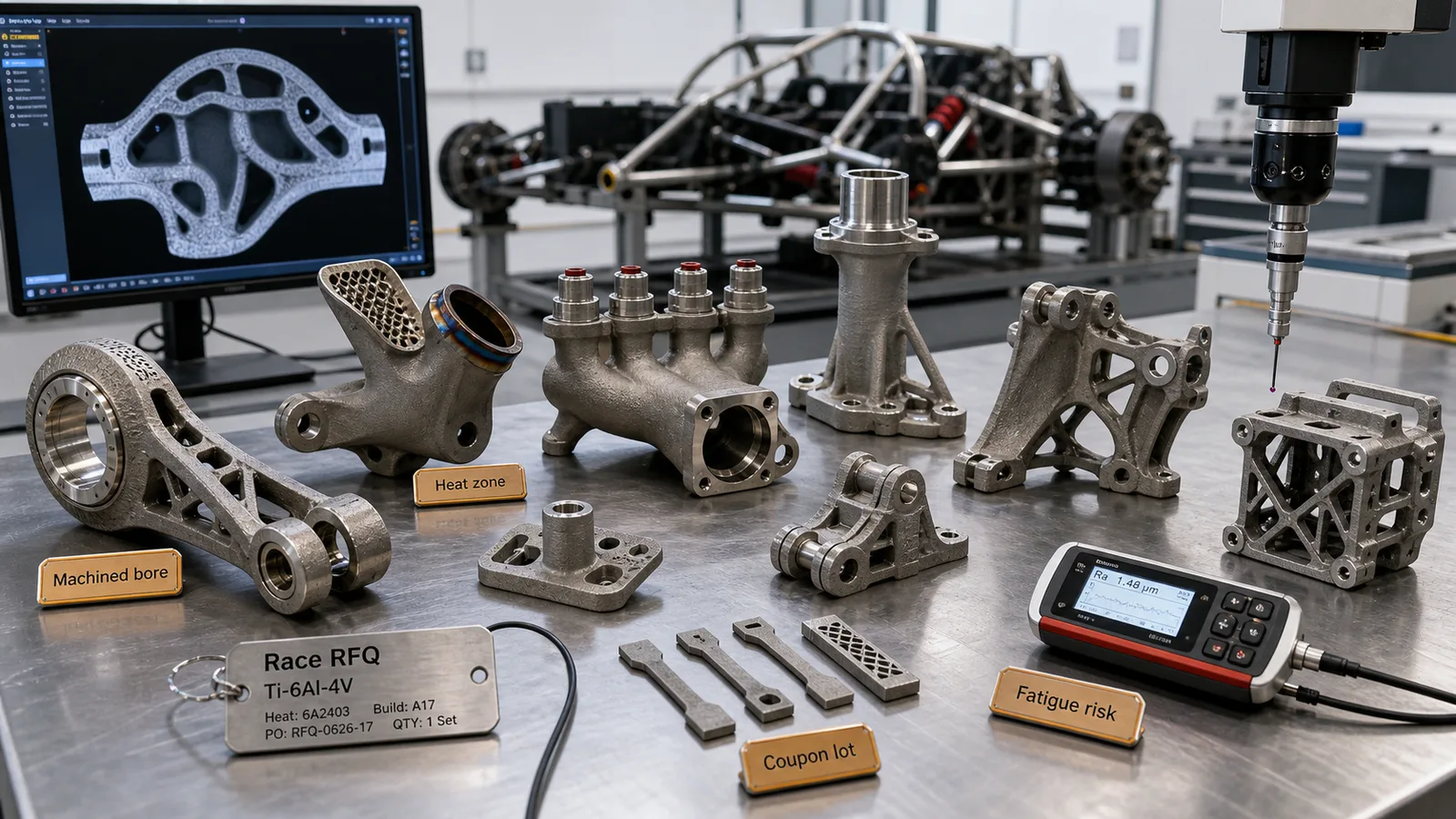
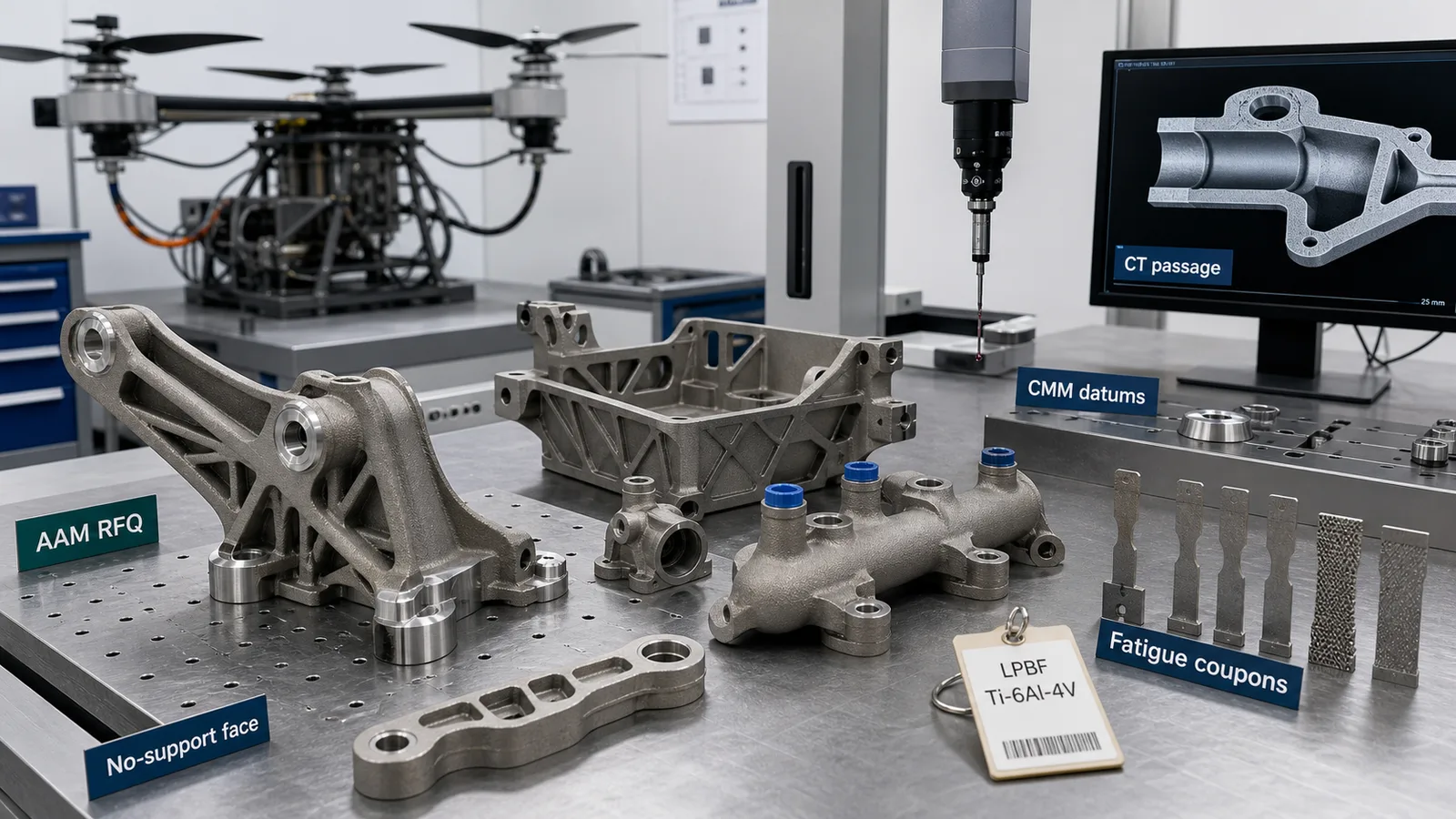
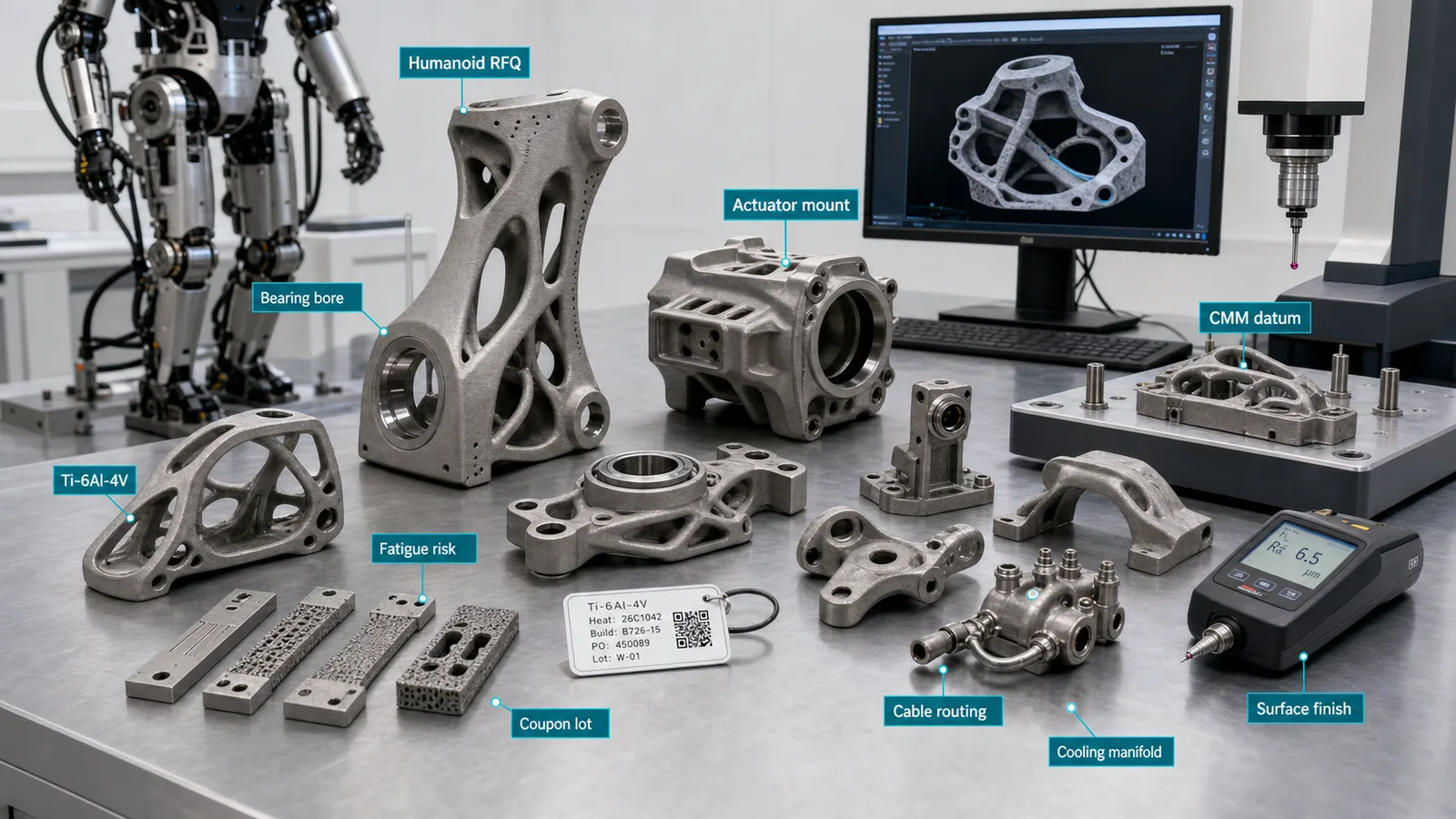
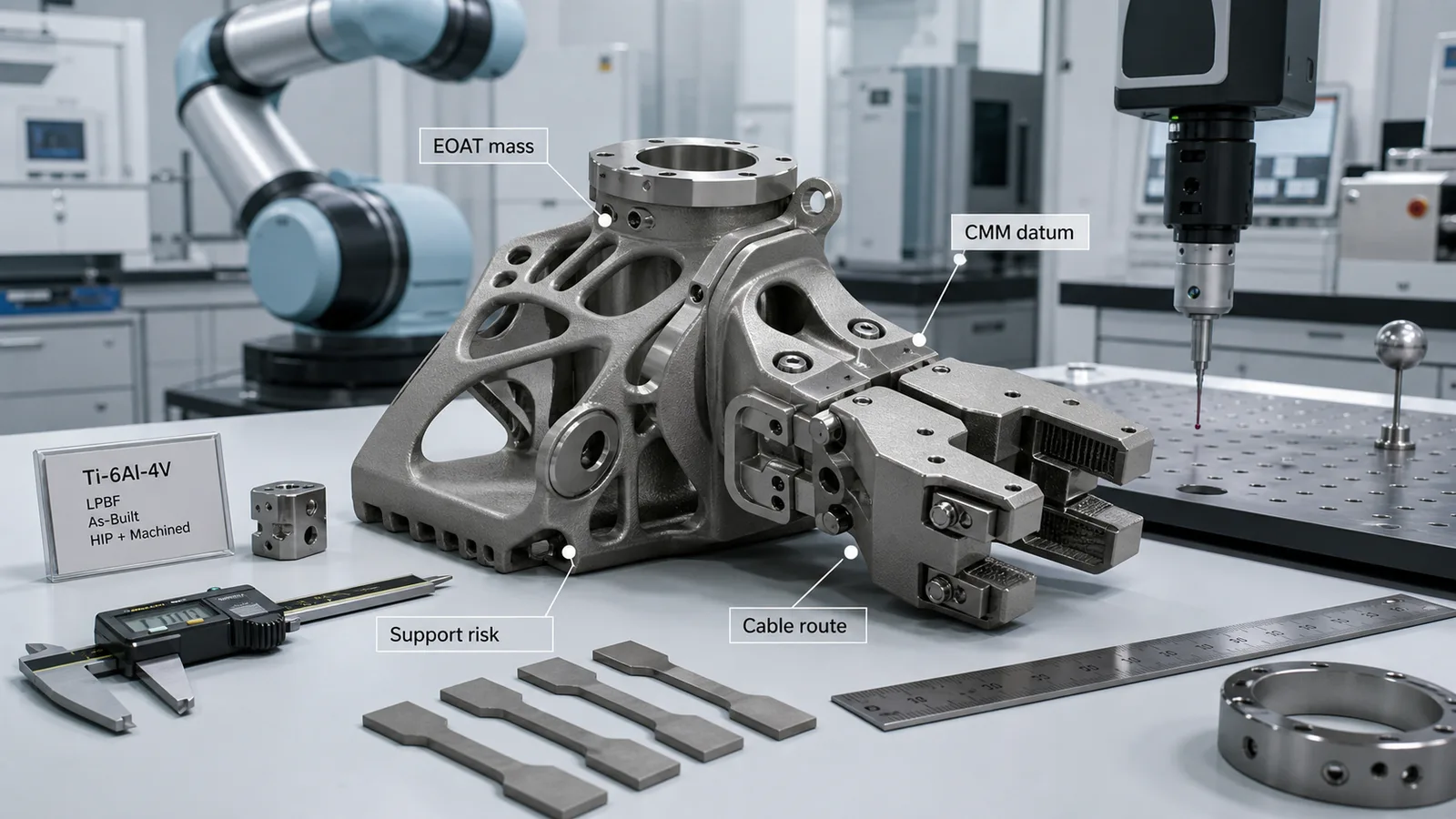
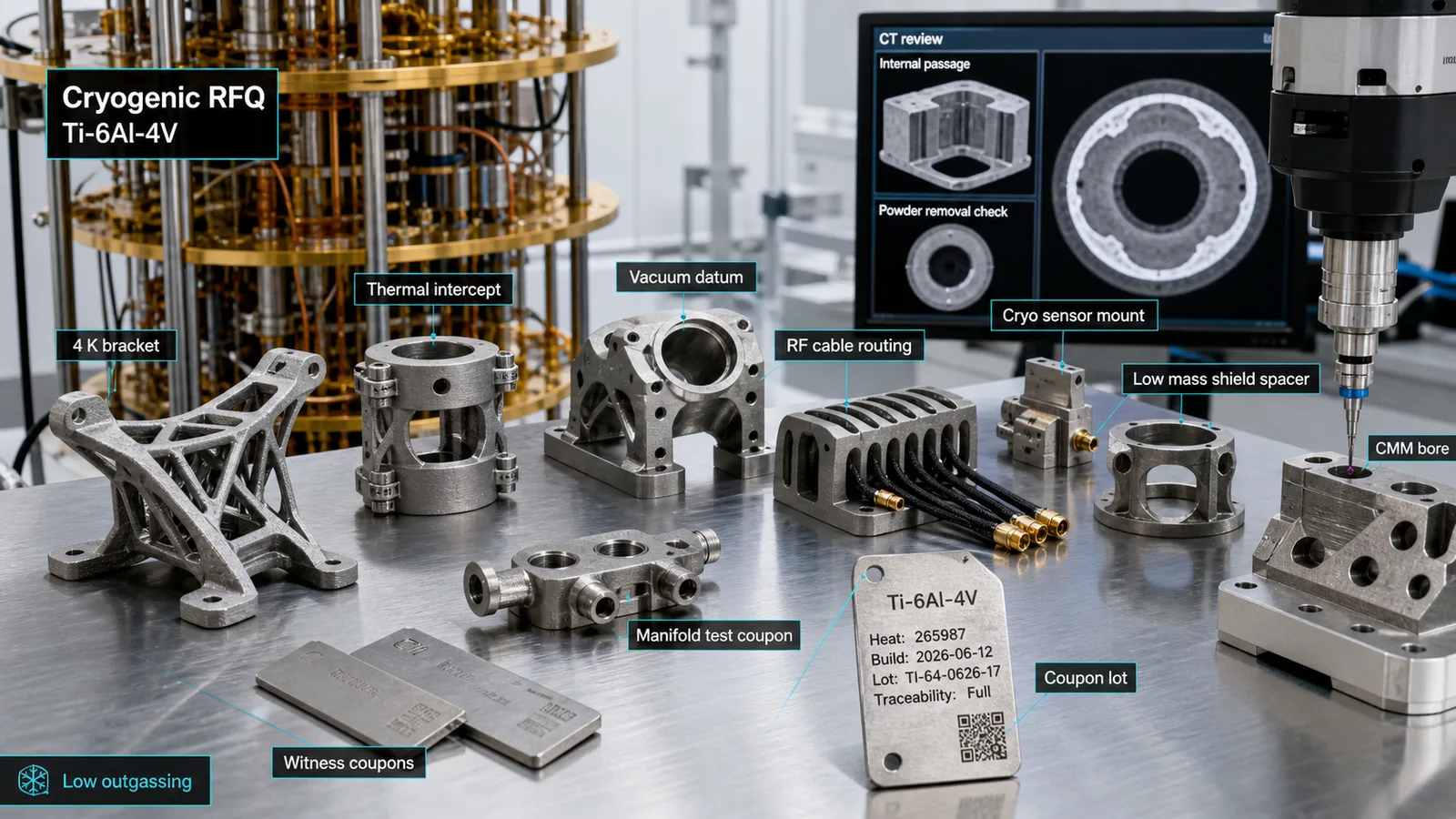
Representative article image; not a customer acceptance record or proof of a qualified manufacturing route. Refer to the cited sources and part-specific inspection records for engineering evidence.
On this page
Motorsport teams usually reach titanium 3D printing from a familiar conflict: the part needs to be lighter, stiffer, smaller, hotter, faster to iterate, or easier to package, but the race calendar does not wait for a long conventional manufacturing route. Titanium additive manufacturing can help when the geometry creates a measurable vehicle benefit and the delivered part includes machining, inspection, and traceability.
It is not a universal racing shortcut. Some series restrict materials, processes, cost, homologation changes, or component design freedom. A titanium AM quote that ignores the rulebook can be technically impressive and still unusable.
This guide is for racing engineers, procurement teams, and performance vehicle builders who need to decide when titanium AM is worth quoting for motorsport hardware: suspension-adjacent parts, sensor mounts, thermal brackets, compact manifolds, steering and pedal hardware, test-rig parts, and low-volume development components.
Why Motorsport Titanium AM Is Timely in 2026
Motorsport is entering another engineering reset. That does not mean every race part should be printed. It does mean lightweighting, thermal packaging, hybrid powertrain development, rulebook compliance, and faster iteration are all active topics.
Recent public signals are useful:
- The FIA presented the 2026 Formula 1 regulations, including major changes to chassis, aerodynamics, power units, and safety objectives.
- The FIA World Motor Sport Council approved 2026 Formula 1 power unit regulations, keeping electric power, combustion efficiency, and fuel strategy central to the engineering conversation.
- The FIA Formula One World Championship regulations page lists current 2026 regulation documents, including technical, sporting, financial, operational, and power-unit sections published in June 2026.
Those signals matter because they keep motorsport teams focused on mass, packaging, heat, cost caps, reliability, and documentation. Titanium AM fits only where it helps one of those constraints better than machining, fabrication, sheet metal, carbon composite, or a purchased component.
For the broader application map, start with Titanium 3D Printing Applications. Use this article for racing-specific RFQ decisions.
Quick Answer
Titanium 3D printing is a strong motorsport candidate when the part is compact, high-value, load-bearing, heat-exposed, difficult to machine efficiently, or tied to rapid development cycles.
Good candidates include:
- Lightweight sensor, camera, lidar, or data-acquisition brackets.
- Suspension clevises, rocker-adjacent links, or test hardware where class rules allow the material and process.
- Turbo, exhaust, wastegate, heat-shield, or engine-bay brackets where temperature margin matters.
- Compact coolant, oil, or pneumatic manifolds with realistic cleaning and leak-test access.
- Steering column, pedal box, damper, or cockpit mechanism brackets where stiffness and packaging matter.
- Wind-tunnel, dyno, rig-test, and development hardware that needs race-like material behavior.
- Low-volume spares or development parts where tooling delay is worse than AM cost.
Weak candidates include large panels, simple flat plates, low-cost tabs, commodity fastener brackets, cosmetic parts, and any race component where the rulebook or homologation path does not allow the change.
Start With the Rulebook, Not the Printer
Motorsport sourcing is different from general industrial sourcing because technical legality can be as important as strength. Before sending a titanium AM RFQ, confirm:
- Whether titanium is allowed for that component family.
- Whether additive manufacturing is allowed or restricted.
- Whether material grade, density, wall thickness, or surface treatment is controlled.
- Whether the component is homologated, frozen, cost-capped, or classified as a standard part.
- Whether a supplier change requires documentation, inspection, or approval.
- Whether the part is for race use, test use, wind-tunnel use, dyno use, or garage equipment.
If the supplier does not know the series rules, that is acceptable. If the buyer does not define the rule boundary, the quote is not ready.
Motorsport Part Fit Matrix
| Part family | Why titanium AM can help | Main hidden risk | RFQ evidence to define |
|---|---|---|---|
| Sensor and data brackets | Low mass, stiffness, cable routing, fast design iteration | Vibration and datum stability | Machined datum pads, CMM, surface finish where loaded |
| Suspension-adjacent clevises or links | Compact load paths, high specific strength, reduced material waste | Fatigue, rule legality, bearing fits | Machined bores, fatigue review, CMM, coupons if justified |
| Exhaust and turbo brackets | Temperature margin, compact geometry, fewer welded details | Thermal cycling, oxidation, crack initiation | Material condition, heat zone, surface finish, proof or fit check |
| Cooling or oil manifolds | Integrated passages, fewer fittings, better packaging | Powder removal, leak paths, pressure loss | CT or borescope, cleaning record, pressure/leak test |
| Steering and pedal hardware | Stiffness, ergonomic packaging, low-volume iteration | Bearing interfaces and compliance | CNC-finished bores, CMM, roughness, assembly fit |
| Test-rig and dyno hardware | Race-like material behavior without full race-part burden | Over-specifying inspection for non-race parts | Revision control, material certs, targeted inspection |
The best motorsport AM parts are not selected because they look complex. They are selected because a lighter, stiffer, cleaner, or faster-to-iterate route changes lap-time development, reliability, or program schedule.
Lightweighting Must Protect Stiffness
Motorsport lightweighting is valuable only when the system still behaves correctly. A 20 percent bracket mass reduction can be a poor trade if it lowers stiffness, shifts a sensor, changes pedal feel, worsens damper alignment, or creates a fatigue-critical thin rib.
Strong RFQ inputs include:
- Target mass and maximum acceptable mass.
- Load cases: acceleration, braking, curb strike, vibration, heat cycling, or clamp load.
- Interface requirements: bore position, flatness, bearing fit, thread condition, and datum scheme.
- Surfaces allowed to remain as-built.
- No-support faces near fatigue or precision interfaces.
- Whether the part is for race, qualifying, test, dyno, simulator, wind tunnel, or spare inventory.
If the value is weight reduction, use Titanium Additive Manufacturing Applications That Achieved Real Weight Reduction to frame the system-level decision. If the part is simple and already machines quickly, run the When Not to Use Titanium Additive Manufacturing screen before requesting production pricing.
Fatigue and Vibration Are Usually the Boundary
Race parts see repeated load, vibration, curb impact, thermal cycling, and aggressive maintenance. Titanium AM can produce useful high-strength structures, but fatigue behavior depends on the full route: build orientation, support contact, surface condition, residual stress, heat treatment, HIP when justified, machining, and inspection.
High-risk motorsport details include:
- Support scars on tensile or bending surfaces.
- Printed bores used directly for bearings or rod ends.
- Thin lattice or rib transitions near loaded bosses.
- Sharp lightweighting pockets around bolt holes.
- As-built surfaces under clamp load.
- Heat-exposed brackets with abrupt section changes.
- Internal channels that cannot be cleaned or inspected.
For fatigue-sensitive hardware, request the supplier’s proposed orientation, support locations, protected faces, post-processing route, machining allowances, and inspection scope. Do not ask for HIP, CT, and coupons automatically. Ask which evidence changes the acceptance decision.
Use Titanium 3D Printing Fatigue Design for fatigue-critical racing parts, and pair it with Titanium DfAM Rules for LPBF and EBM before freezing a topology-optimized shape.
Heat-Zone Parts Need Material and Surface Discipline
Motorsport engine bays and exhaust zones can justify titanium when the part must stay light while surviving temperature, vibration, and tight packaging. Additive manufacturing can help when a bracket or manifold needs integrated ribs, shield tabs, compact line routing, or part consolidation.
Good heat-zone candidates include:
- Turbo and wastegate brackets.
- Exhaust-adjacent sensor mounts.
- Heat-shield tabs and compact support structures.
- Engine-bay cable or line-management brackets.
- Test-stand adapters for thermal cycling.
- Compact coolant or oil routing parts where titanium’s corrosion and strength balance fits the fluid environment.
The RFQ should define temperature range, cycle count if known, nearby fluids, cleaning requirements, surface condition, and whether oxidation, coating, or passivation is part of the route. A heat-colored titanium part can look right and still be weak if the notch, support scar, or fit condition is wrong.
For thermal and internal-passage parts, use Titanium 3D Printed Heat Exchangers and Titanium 3D Printed Internal Channels to define flow, pressure, cleaning, and CT assumptions.
For compact oil, coolant, pneumatic, and actuator valve manifolds that need machined ports and leak evidence, use Titanium 3D Printing for Hydraulic Manifolds and Fluid Power Components.
Material Choice: Ti-6Al-4V Is Common, but Not Automatic
Ti-6Al-4V is often the first review for motorsport titanium AM because it has a mature supplier base, strong strength-to-weight performance, and familiar post-processing routes. Ti-6Al-4V ELI may be discussed when ductility, fracture behavior, or tighter interstitial control matters. CP titanium can be useful for selected corrosion or ductility needs, but it is not a default structural substitute.
Do not specify a titanium grade only because another team used it. Define:
- Series rule allowance for material and process.
- Load and temperature exposure.
- Required material condition after heat treatment.
- Whether HIP is required, optional, or supplier-recommended.
- Powder lot traceability and certificate level.
- Surface treatment, coating, or cleaning expectations.
- Whether substitutions are allowed.
For alloy screening, use Titanium AM Material Selection: Ti-6Al-4V, ELI, and CP Titanium.
LPBF Usually Leads for Compact Racing Parts
LPBF is usually the first AM route reviewed for compact motorsport parts because it supports fine geometry, weight-reduction ribs, small manifolds, brackets, and integrated features. It also brings support removal, powder removal, residual stress, surface finish, machining, and inspection into the quote.
EBM may fit selected larger or more tolerant titanium parts when the supplier’s route matches the surface and feature expectations. DED is usually better for larger near-net blanks, repair-style work, or development hardware that will be machined heavily after deposition.
The process choice should follow the acceptance route:
- LPBF for compact brackets, clevises, mounts, manifolds, and fine structures.
- EBM when geometry and surface expectations tolerate the route.
- DED for larger near-net or repair-style racing hardware with machining stock.
- CNC machining, fabrication, carbon composite, or aluminum when AM geometry does not improve the car.
For route selection, use Titanium AM Process Selection: LPBF vs EBM vs DED.
CMM, CT, and Trackside Practicality
Motorsport teams often need parts quickly, but speed does not remove the need for evidence. The right inspection package depends on part risk and use state.
Typical evidence options include:
- CMM report for bores, datums, bearing interfaces, and mounting faces.
- Surface roughness checks on fatigue-sensitive or sealing regions.
- CT or borescope review for internal channels, trapped powder, or hidden walls.
- Pressure, flow, or leak test for manifolds.
- Coupons tied to build lot and post-processing condition when required.
- COA, COC, build record, powder lot, heat-treatment record, and revision record.
Trackside practicality matters too. If a part is likely to be replaced between sessions, define spare quantity, marking, handling, and inspection acceptance. If the part is a development item, separate “fast test article” from “race accepted part” in the RFQ.
The evidence framework is covered in Titanium AM Qualification and Inspection Evidence, while datum planning is covered in Titanium 3D Printing Tolerances: Datum Planning and CMM.
Cost: Compare Development Speed, Not Print Price Alone
Motorsport AM can look expensive when measured only against a machined bracket. It can look sensible when it avoids delayed tests, reduces assembly work, improves stiffness, or lets the team iterate three concepts before a conventional route would deliver the first one.
Cost drivers include:
- Machine time and build height.
- Support volume and support-removal access.
- Stress relief, heat treatment, HIP, and finishing.
- CNC machining of bores, faces, and datums.
- Fixtures for repeatability.
- CMM, CT, pressure testing, coupons, and documentation.
- Revision churn during development.
Control cost by separating prototype, test, and race-accepted states. A dyno bracket may not need the same evidence package as a race suspension part. A cooling manifold may need more cleaning and leak evidence than a solid sensor bracket. The quote should reflect those differences.
For quote normalization, use Titanium 3D Printing Cost Drivers: How to Reduce RFQ Price and the Titanium AM RFQ and Procurement Guide.
RFQ Scenario: Exhaust-Adjacent Sensor Bracket
Consider a Ti-6Al-4V exhaust-adjacent sensor bracket for a race development program. The aluminum version loses margin near the heat zone. A fabricated steel bracket survives but adds mass and needs several welded details. A titanium LPBF part may integrate the sensor boss, heat-shield tab, cable clearance, and mounting feet in one compact shape.
A weak RFQ says:
Please 3D print this racing bracket in titanium as soon as possible.
A stronger RFQ says:
Please review this exhaust-adjacent sensor bracket for Ti-6Al-4V LPBF. It is for development testing, not a homologated race component unless confirmed later. Functional features are the two mounting bores, sensor boss, cable-clearance window, and heat-shield tab. Please quote the delivered part including stress relief, support removal, machining of bores and datum face, surface condition in the heat zone, CMM report, material traceability, and any recommended DfAM changes to reduce support contact or fatigue risk. State whether HIP, CT, or coupons are recommended for this risk class and separate mandatory work from optional risk-reduction work.
The second RFQ protects the team from comparing a print-only shape against a delivered motorsport part that can be fitted, tested, and documented.
Motorsport Titanium AM RFQ Checklist
Send the supplier:
- STEP file and drawing with datums.
- Race series, rulebook boundary, and whether the part is race, test, dyno, rig, or garage equipment.
- Target alloy and allowed substitutions.
- Quantity, spare count, target lead time, and revision expectations.
- Load case summary: vibration, fatigue, curb impact, clamp load, thermal cycling, pressure, or flow.
- Functional surfaces: bores, threads, bearing lands, sealing faces, datum pads, and flatness surfaces.
- Surfaces allowed to remain as-built.
- No-support regions and support-removal access limits.
- Internal channels, hollow regions, or trapped-powder risk.
- Post-processing: stress relief, HIP if justified, machining, finishing, cleaning, coating, or passivation.
- Inspection and documents: CMM, CT, roughness, pressure or leak test, coupons, COA, COC, build record, powder lot, heat-treatment record, and revision log.
- Permission for supplier DfAM feedback before final quotation.
If rule compliance is uncertain, do not ask the supplier to guess. Confirm the technical regulation path before committing race-use hardware.
When to Avoid Titanium AM for Racing Parts
Avoid titanium AM when:
- The rulebook does not allow the material or process.
- The part is a simple laser-cut or machined plate.
- Aluminum, steel, composite, or fabrication already solves the problem.
- All important surfaces need conventional machining anyway.
- The design has inaccessible supports on high-stress faces.
- Internal passages cannot be cleaned or inspected.
- The team wants a low-cost commodity spare rather than a performance or schedule advantage.
- The part is homologated and the change path is not approved.
Titanium AM should earn its place by improving development speed, packaging, stiffness, heat tolerance, mass, or evidence. If it only makes the CAD model look more sophisticated, it is probably the wrong route.
Bottom Line
Titanium 3D printing can be valuable for motorsport and racing parts when the component is compact, high-value, heat-exposed, fatigue-sensitive, packaging-constrained, or tied to rapid development. The strongest candidates are sensor brackets, suspension-adjacent hardware, cooling or oil manifolds, exhaust-zone brackets, steering and pedal parts, and test-rig hardware where AM changes the route to a useful delivered part.
The practical decision is not “Can this race part be printed?” It is “Can this titanium AM route deliver a legal, lighter, inspectable, track-useful part faster or better than the conventional route?”
For an RFQ review, send CAD, drawing, race-use state, rule boundary, load context, target alloy, quantity, lead time, post-processing expectations, and inspection requirements through the RFQ inputs page or email info@szcomo.com.
- Motorsport
- Racing
- Formula 1
- Lightweighting
- Fatigue
- Thermal management
- LPBF
- CMM
- CT
- RFQ